

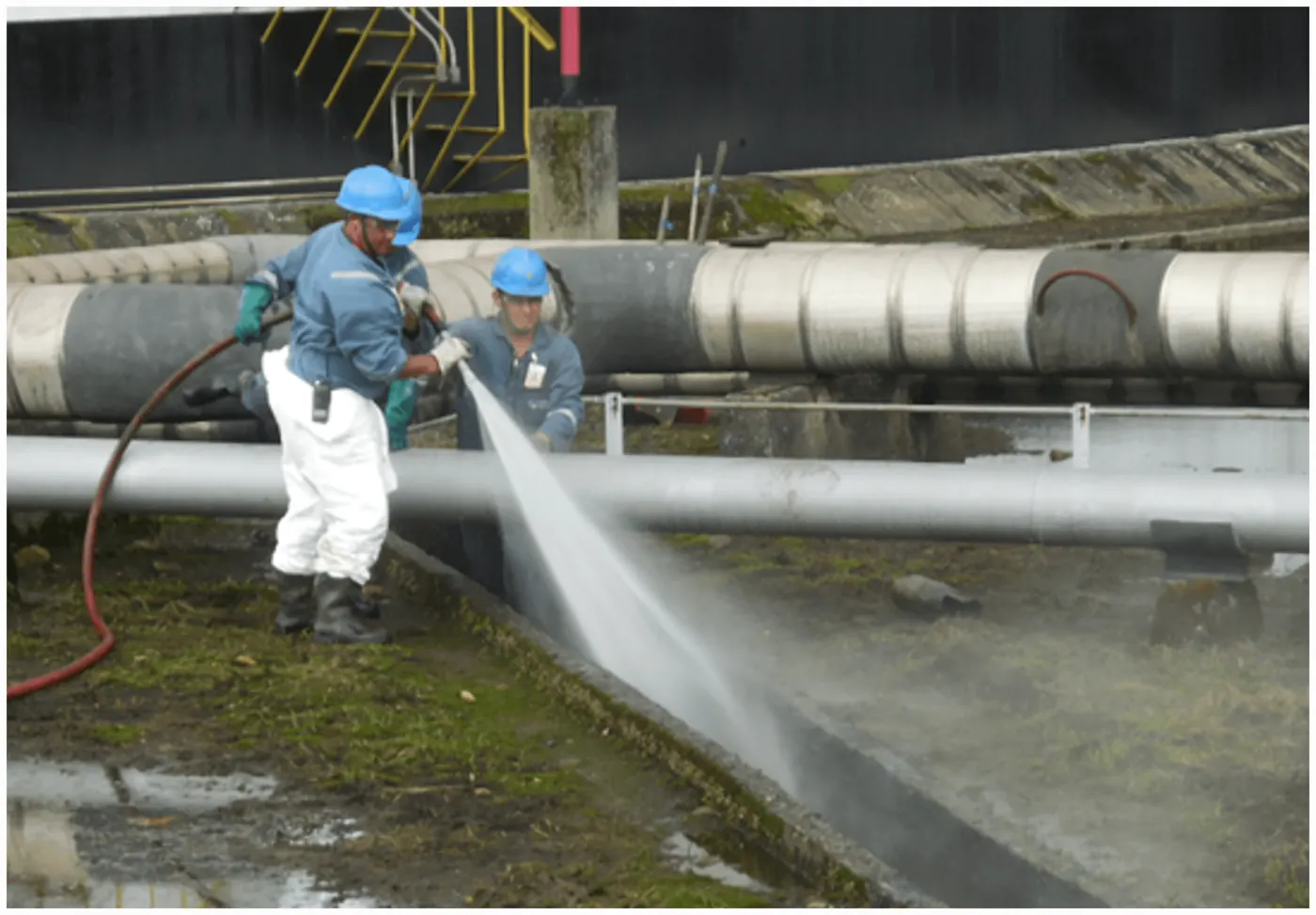
TSL's maintenance area covers industrial cleaning and the services that support planned shutdowns and continuous plant operation: tanks, process equipment, lines and pipelines. The work combines hydroblasting, chemical cleaning, pigging, inerting, steam generation and vacuum collection, at onshore and offshore units.
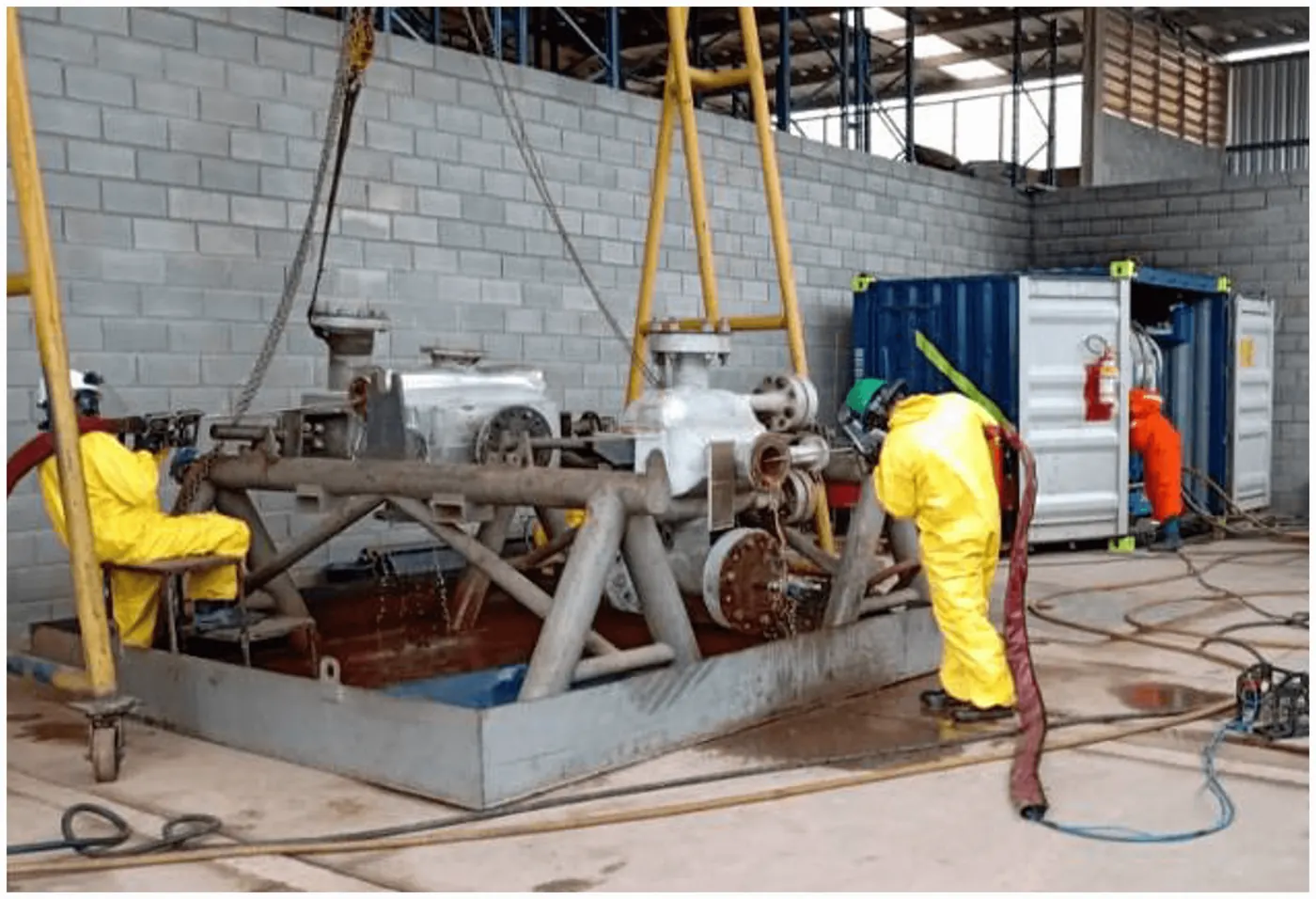
TSL has more than 40 years of experience, an operational base in Macaé (RJ) and a management system certified to ISO 9001, ISO 14001 and ISO 45001. The waste generated in each service goes on to waste management.
Tank cleaning
Industrial tanks
Removal of sediment, sludge and scale from crude oil, fuel and chemical tanks, using manual, mechanized and robotic methods, from planning to waste disposal.
Oil tanks
Periodic cleaning of fuel oil reservoirs to recover usable capacity and extend the service life of the steel structures.
Fuel tanks
Removal of sludge and water, with confined space safety and proper waste disposal.
Offshore tanks
Oil, produced water and drilling fluid tanks on platforms and FPSOs, with residual product removed by pneumatic pumps and crews trained for high risk operations.
FPSO tanks
Cleaning of tanks on floating production units, with planning aligned to the unit's maintenance schedule.
Ship tanks
Internal cleaning before a new cargo, to prevent cross contamination between products, in compliance with MARPOL and SOLAS.
Oil tankers
Removal of oily sludge, hydroblasting and waste disposal in compliance with MARPOL.
Hydroblasting
Industrial hydroblasting
High and ultra high pressure water jets remove scale, residue, paint and oxides from heat exchangers, tanks and piping without damaging the surfaces.
40,000 psi water jetting
Ultra high pressure for heavy cleaning, severe scale and surface preparation, using water only, with no aggressive chemicals or abrasives.
Water jetting unit rental
Equipment with a trained operating crew to clean boiler tubes, furnaces, towers and reactors and to water cut piping, steel structures and concrete.
Equipment, lines and pipelines
Heat exchangers
Hydroblasting of the tube bundle to remove fouling and restore heat transfer, in shell and tube, plate and spiral exchangers.
Piping
Hydroblasting, pigging and chemical cleaning to clear blocked lines, prepare for inspection or change the product being carried.
Pipelines
Pigging and high pressure hydroblasting in refineries, chemical plants, terminals and offshore units.
Pigs
Sale, maintenance and storage of pigs, integrated with pigging operations, which clean the entire line without opening the pipeline.
Chemical cleaning
Controlled circulation of solutions formulated for the type of scale and the equipment material, in piping, heat exchangers, boilers and cooling towers.
Inerting and steam
Inerting
Replaces the potentially explosive atmosphere of tanks, piping and vessels with an inert atmosphere, using nitrogen and steam, in accordance with NFPA 69.
Steam boiler rental
Fire tube and water tube boilers for shutdowns, temporary projects and emergencies, with operation, maintenance and NR-13 compliance.
Boiler rental and operation
Fire tube boilers from 650 to 10,000 kg/h of steam, up to 300 psi, for inerting and for removing hydrocarbons adhered to equipment walls.
Vacuum collection and offshore
Vacuum truck
Suction and transport of effluents and waste, with 8 m³ and 12 m³ tanks and an ANTT license for Class I and Class II waste.
Hydrovac truck
High pressure water jetting and vacuum suction in the same unit: the jet breaks up the waste and the vacuum collects it.
Offshore maintenance
Cleaning of process equipment, tanks, heat exchangers and vessels, hydroblasting, inerting and surface preparation on platforms and FPSOs.
Frequently asked questions
Which industrial maintenance services does TSL provide?
Tank cleaning, high and ultra high pressure hydroblasting, cleaning of heat exchangers, piping and pipelines, chemical cleaning, inerting, steam boiler rental, vacuum and hydrovac trucks, and offshore maintenance on platforms and FPSOs.
How does TSL clean tanks with less crew exposure?
With mechanized and robotic systems that complement manual cleaning. They reduce operator entry into confined spaces and shorten the time needed to complete the job.
What happens to the waste removed during cleaning?
It is collected, transported and disposed of with traceability documentation under TSL's waste management service. The fleet operates with an ANTT (Brazilian land transport agency) license for Class I and Class II waste.