

Industrial waste management
Every industrial operation generates waste: oily sludge from tanks, sludge from treatment plants, dredging sediment, contaminated materials from maintenance shutdowns. Managing this waste means ensuring that each stream is identified, stored, transported and disposed of as required by law, with documentation that proves the path it followed.
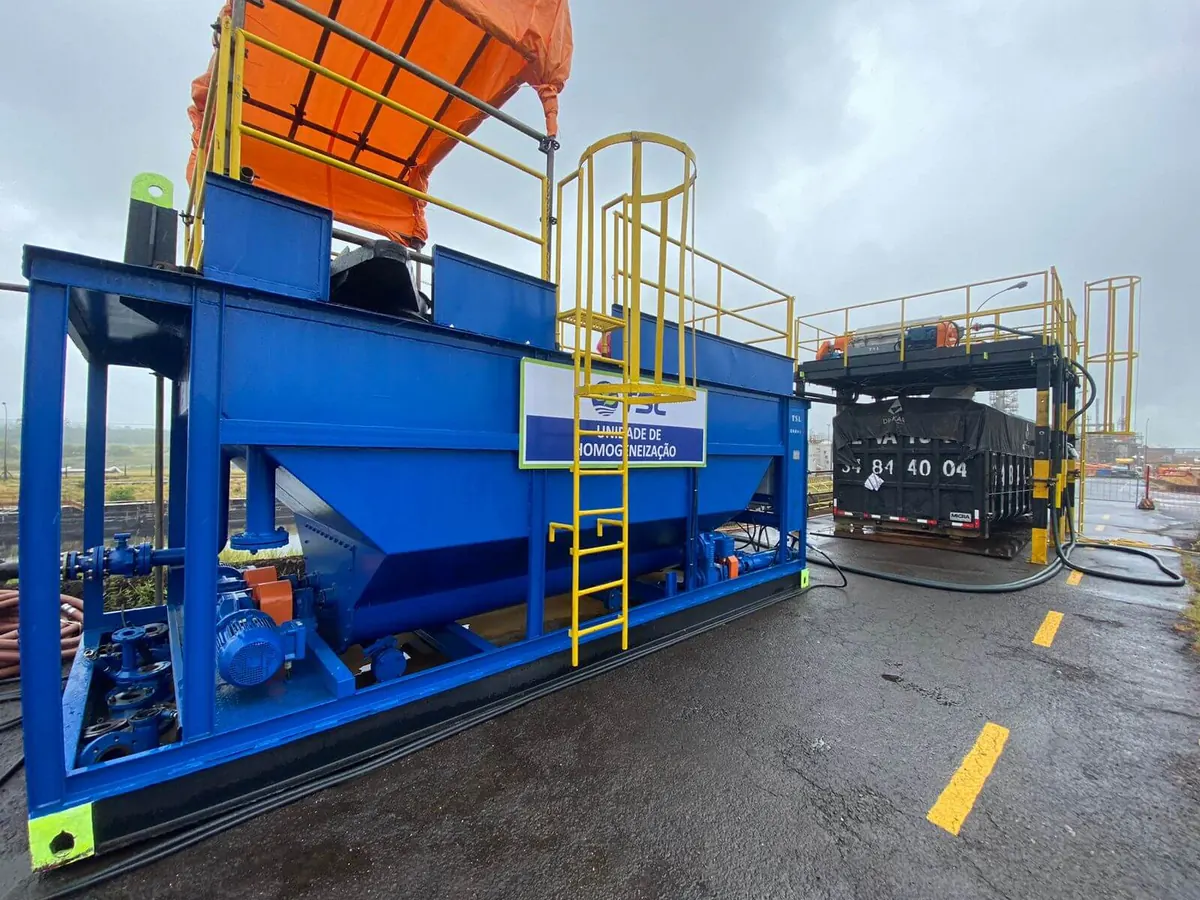
TSL offers a complete waste management solution, with compliance and safety at every step, and integrates waste management with its own industrial cleaning, dredging and sludge thickening services. Waste generated during the service leaves with its destination already defined.
Classification: Class I and Class II waste
The first step is to know what is being generated. ABNT NBR 10004 (Brazilian solid waste classification standard) classifies solid waste into two major groups:
- Class I (hazardous): exhibits flammability, corrosivity, reactivity, toxicity or pathogenicity. Oily sludge and materials contaminated with hydrocarbons usually fall into this group.
- Class II (non-hazardous): divided into II A, non-inert, and II B, inert.
The class determines everything that follows: storage method, type of transport, documentation and permitted disposal. That is why TSL carries out the waste inventory and characterization with analysis by accredited laboratories before proposing a disposal route.
Brazilian National Solid Waste Policy (Law 12.305/2010)
The National Solid Waste Policy establishes shared responsibility for the life cycle of waste: the generator, the transporter and the disposal facility are all accountable for what happens to the material. It also sets the order of priority in waste management: non-generation, reduction, reuse, recycling, treatment and, lastly, environmentally sound final disposal.
In practice, hiring a supplier without proper regulatory documentation transfers risk to the plant itself. Traceability of each load, from collection to disposal, is what demonstrates compliance with the law.
Traceability: MTR, CADRI and disposal certificate
Documentary control follows the waste through every movement:
- MTR (waste transport manifest): issued for each load, it records the generator, transporter, disposal facility, and the type and quantity of waste.
- CADRI (São Paulo state waste disposal certificate): in the state of São Paulo, this Certificate of Movement of Waste of Environmental Interest authorizes certain types of waste to be sent to a licensed disposal facility.
- Final disposal certificate: issued by the disposal facility, it proves that the waste received the stated treatment or disposal.
Collection, internal logistics and licensed transport
Within the client's facility, TSL performs the collection, sorting and safe storage of waste. For external transport, the fleet operates with an ANTT (Brazilian land transport agency) license for hazardous goods, authorization for Class I and Class II waste, and drivers holding MOPP (hazardous goods transport training for drivers) certification.
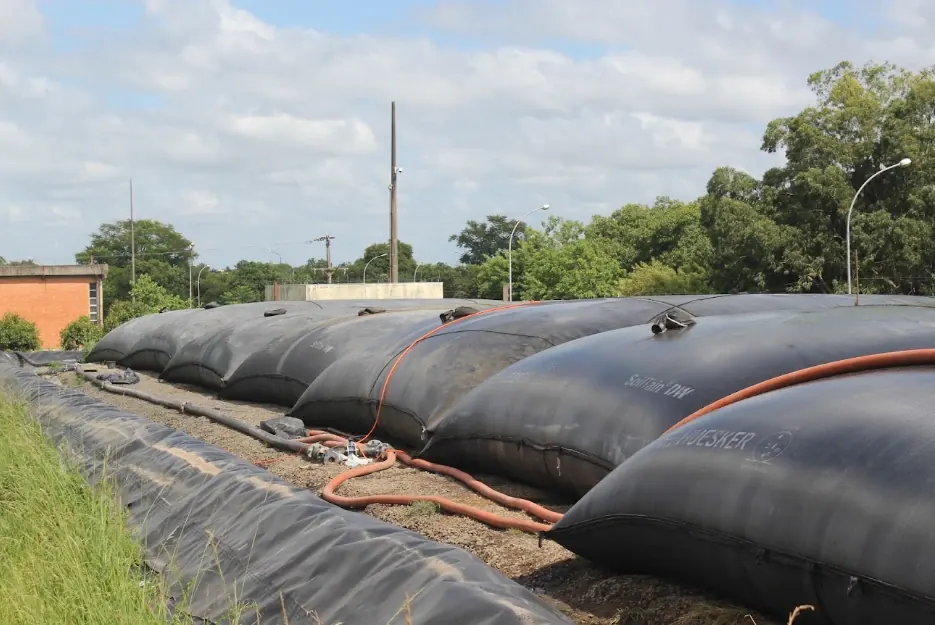
Liquid and pasty waste, such as effluents, sludges and oily residues, is collected with a vacuum truck. Sludges with a high water content first undergo thickening or dewatering in geobags, which reduces the volume and the cost of transport and disposal.
Industrial waste disposal methods
The disposal route is chosen according to the class and characteristics of the waste, always at a licensed disposal facility:
| Disposal | Typical application |
|---|---|
| Recycling and reuse | Materials with recovery value, segregated at the source. |
| Co-processing | Waste with calorific value, used as fuel or raw material in cement kilns. |
| Incineration | Hazardous waste that requires thermal destruction. |
| Class I or Class II industrial landfill | Waste with no treatment or recovery alternative. |
| Effluent treatment | Liquid phases separated during sludge thickening and dewatering. |
For choosing the disposal facility and the documentation for each route, see industrial waste disposal.
Why integrate waste management with the cleaning service
When the same company performs the cleaning and manages the waste generated, planning takes into account the volume, class and disposal route from the outset. This avoids waste sitting idle while awaiting a decision, reduces handling and keeps documentation consistent from start to finish. TSL operations follow a management system certified to ISO 14001, as well as ISO 9001 and ISO 45001.
Frequently asked questions
What are the steps of industrial waste management?
Waste inventory and characterization, internal logistics (collection, sorting and storage at the client's site) and external transport with proper final disposal.
How is waste characterized?
Through detailed mapping of the waste generated in the process and analysis by accredited laboratories, which determines the class of each waste stream.
What is the difference between Class I and Class II waste?
Under the ABNT NBR 10004 classification (Brazilian solid waste classification standard), Class I waste is hazardous, due to characteristics such as flammability, toxicity or corrosivity. Class II is non-hazardous and is divided into non-inert (II A) and inert (II B).
Does TSL handle internal waste logistics at the client's site?
Yes. TSL performs the collection, sorting and safe storage of waste within the client's own facility.
Who is responsible for the waste after it leaves the plant?
Under Law 12.305/2010 (Brazilian National Solid Waste Policy), responsibility is shared among the generator, the transporter and the disposal facility. That is why the supplier's regulatory compliance also protects the client.
How is the final disposal of waste determined?
By the class and characteristics of each waste stream, always in compliance with environmental regulations and with the disposal facility's license.