+55 11 2196-2300 tsl@tsleng.com.br São Paulo · Macaé, Brazil

Lagoon Dredging Service

Lagoon Dredging

THE dredging of lagoons This is a fundamental activity for maintaining the operational efficiency of industrial wastewater treatment systems. Over time, stabilization ponds, settling tanks, and reservoirs accumulate sediments, sludge, and solids from production processes, gradually reducing the usable volume of these structures.

In this context, the dredging of lagoons This becomes essential to restore the operational capacity of the units and ensure their proper functioning. wastewater treatment plants (WWTPs)This activity is widely used in various industrial sectors, such as Oil and gas, petrochemicals, mining, chemical industry, pulp and paper, pharmaceuticals, and food., where there is continuous generation of effluents and formation of sediments.

The accumulation of sedimented materials at the bottom of lagoons can compromise treatment efficiency, reduce storage capacity, and affect the performance of solid-liquid separation processes. For this reason, periodic inspections are necessary. dredging of industrial lagoons It is an essential practice to ensure the reliability and efficiency of wastewater treatment systems.

Lagoon Dredging

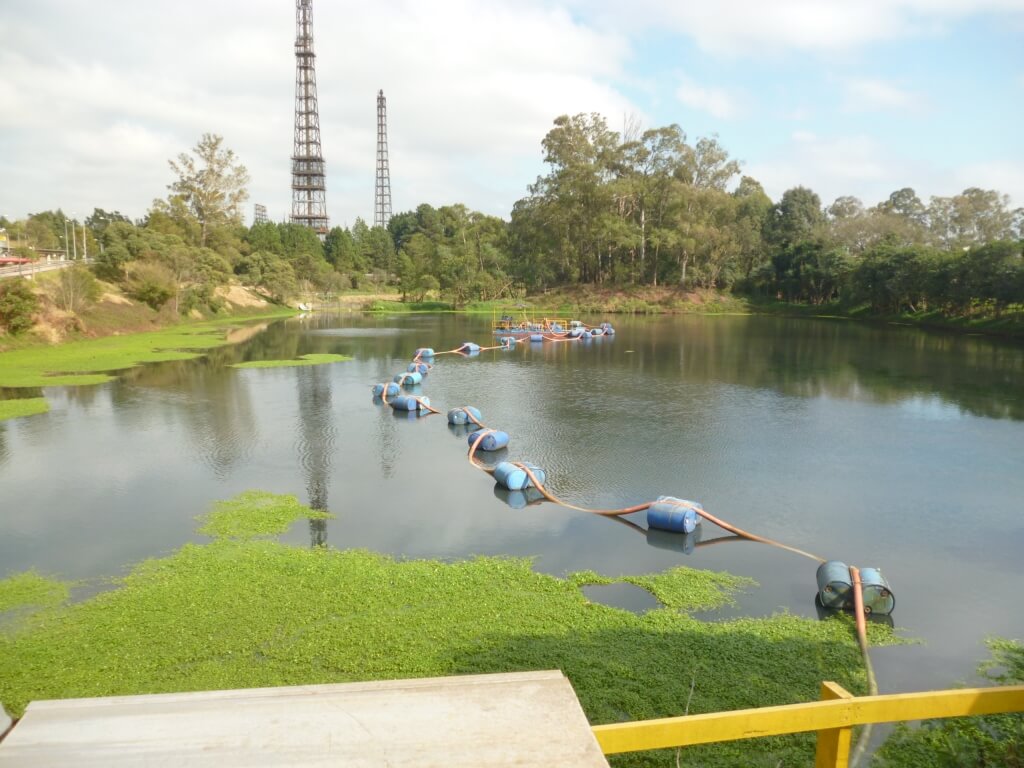
Dredging of lagoons using a dredging barge.

One of the most efficient solutions for dredging of lagoons it is the use of dredging barges, equipment developed to perform the mechanized removal of sediments, sludge, and solid materials accumulated at the bottom of structures.

THE dredging barge It consists of a floating platform equipped with suction, pumping, and sediment transport systems, allowing for continuous operations. dredging of industrial lagoons without the need for complete emptying of the structures.

During the operation of dredging of lagoonsThe sedimented material is then sucked up by suction systems and pumped to processing units or sludge treatment systems.

This process typically involves the following steps:

The clarified liquid phase can be returned to the wastewater treatment system, contributing to process optimization and reduced water consumption in industrial facilities.

Applications of dredging industrial lagoons

THE dredging of lagoons It can be applied to various structures used in industrial and environmental systems, especially in locations where there is a continuous accumulation of sediment.

Among the main applications of dredging of industrial lagoons they are:

The use of dredging barge in lagoon dredging It allows for the continuous and efficient removal of sediment, often without completely interrupting the activities of the industrial plant.

Integration of lagoon dredging with sludge treatment

After dredging of lagoonsThe removed sediments can be sent to sludge treatment processes in order to reduce the volume of the material and facilitate its final disposal.

Among the technologies used in the treatment of sediments from dredging of lagoons Key highlights include:

These processes allow us to carry out the solid-liquid separation, significantly reducing the volume of waste generated and facilitating the transport and proper environmental disposal of the material.

In some industrial sectors, such as oil and gas and petrochemical industry, the sediments originating from dredging of industrial lagoons They may contain oily sludge. In these cases, processes such as... industrial centrifugation They can allow for the recovery of some of the oil present in the material, providing environmental and operational benefits.

Environmental management of waste from lagoon dredging.

Waste from operations of dredging of industrial lagoons They must be characterized and classified according to the criteria established by ABNT NBR 10004, ensuring that the material is sent for treatment or final disposal in properly licensed facilities.

Proper environmental management of waste generated in dredging of lagoons It is essential to ensure compliance with environmental standards and reduce environmental impacts.

TSL: Lagoon dredging specialist

THE TSL Engineering, Maintenance and Environment has extensive experience in performing services of Lagoon dredging, industrial dredging, and sediment removal using a dredging barge..

With more than 40 years of experience in industrial and environmental services.The company has high-performance equipment and specialized technical teams to carry out... Dredging of industrial lagoons, reservoirs, containment basins, and wastewater treatment systems..

In addition to the operations of dredging of lagoonsTSL offers complete solutions that include:

This integrated approach ensures greater operational efficiency and environmental compliance in operations. dredging of industrial lagoons.

THE TSL Engineering, Maintenance and Environment has certifications in the standards ISO 9001, ISO 14001 and ISO 45001, ensuring high standards of quality, safety and environmental management in the execution of its services.

For technical evaluation and development of solutions in Lagoon dredging, industrial dredging, and treatment lagoon cleaning., get in touch with the team at TSL Engineering, Maintenance and Environment Discover the most efficient solutions for optimizing your company's wastewater treatment systems.

Desilting of lagoons, reservoirs and channels

Silting is the buildup of sediment, sludge and organic matter on the bottom of water bodies. In wastewater treatment lagoons, industrial reservoirs and drainage channels, this buildup reduces the useful volume, changes the detention time and lowers the efficiency of the system.
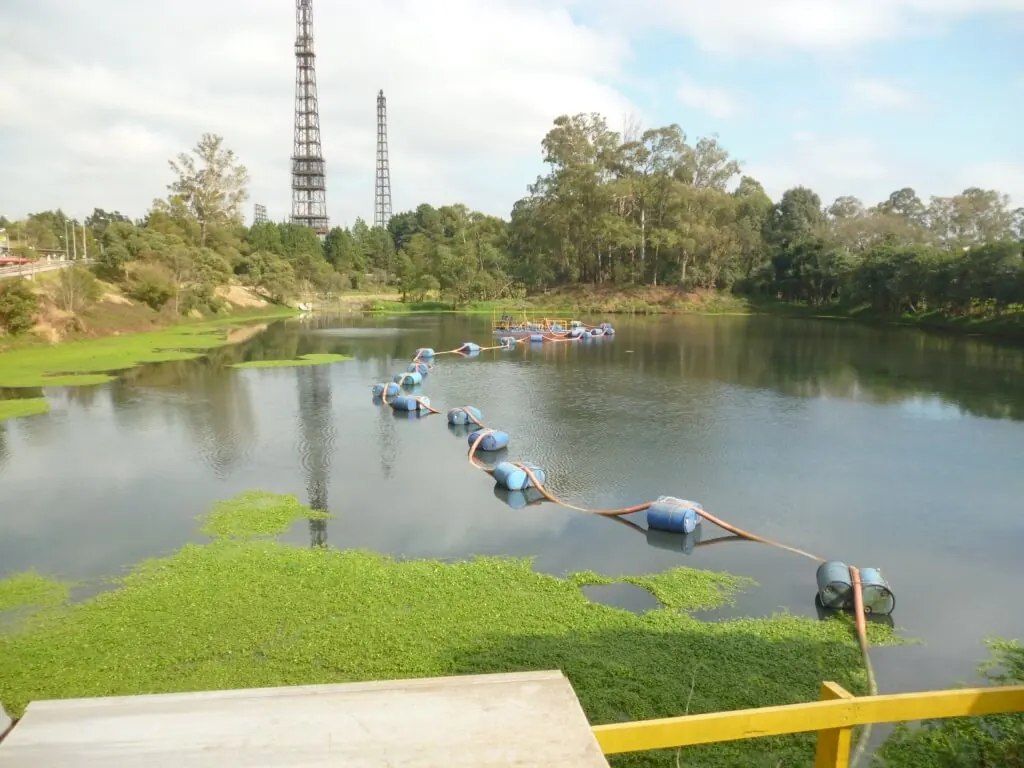
Dredging line with floats on a lagoon

Desilting restores the original capacity of the structure. In lagoons and reservoirs, the material is removed by dredging from a barge that works on the water surface, with no need to drain the structure and no interruption to treatment. In channels, the method is selected according to access, length and sediment type.

Planning starts with a bathymetric survey, which measures depth and the volume of accumulated sediment. This defines the volume to be removed, the equipment and how the material will be dewatered, in geobags or centrifuges.

River and lagoon cleaning

In river and lagoon cleaning, dredging removes the material deposited on the bed and restores the depth needed for flow, water intake or storage. The removed sediment is dewatered, characterized and sent for proper disposal, with the traceability documentation required by environmental legislation.

A planned intervention, based on bathymetric monitoring, costs less than an emergency one carried out under deadline pressure or pressure from the environmental agency. To understand the signs that a lagoon needs intervention, read lagoon desilting: when to do it. For dredging as a broader service, see industrial dredging.

Frequently asked questions

What is pond desilting?

It is the removal of sediment accumulated on the bottom of ponds, reservoirs and basins, with the aim of recovering useful volume and wastewater treatment efficiency.

How do you know if a pond needs desilting?

Signs include deteriorating effluent outlet parameters, bad odor, reduced depth and overflows during rain. An accurate diagnosis is made by bathymetry.

Does the pond need to be drained for desilting?

No. Removal is done by barge dredging, which operates with the pond in service, without interrupting treatment.

Is scheduled desilting more cost-effective?

Yes. A scheduled intervention, based on bathymetric monitoring, costs less than an emergency one, which happens under pressure from the environmental agency and with short deadlines.