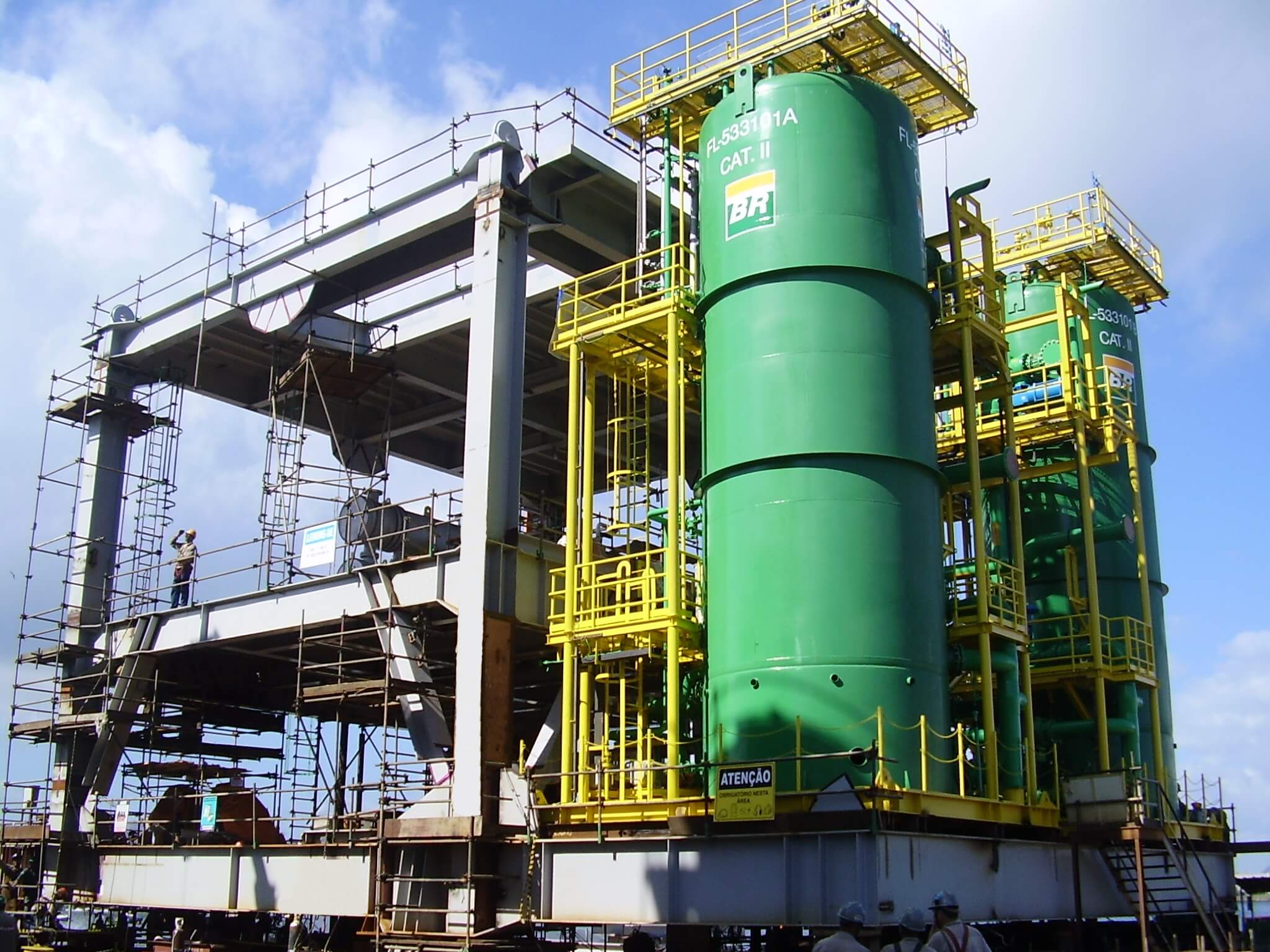
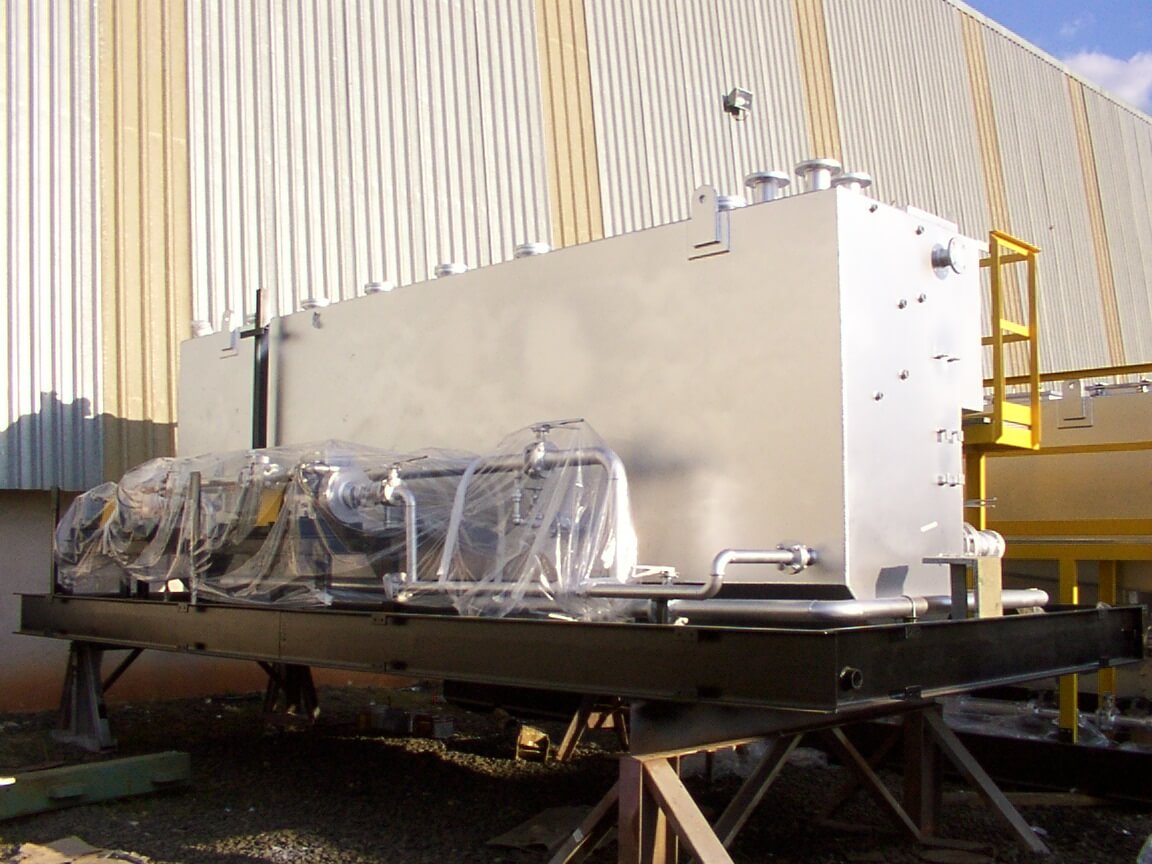
On platforms and FPSOs, produced water is treated on board, with little space and limited weight capacity available. That is why offshore water treatment technologies must be compact and stable under the motion of the unit. The typical sequence separates free oil, floats out the smaller droplets and, when the water is destined for reinjection, performs final polishing.
| Stage | Technology | Function |
|---|---|---|
| Compact flotation | Compact Flotation Unit (CFU) | Removes oil in a small footprint; oil and grease content (TOG) below 20 ppm and up to 80% less installed weight than conventional systems |
| Dissolved gas flotation | DGF with DGF pump | Microbubbles capture the oil droplets that primary separation did not remove |
| Polishing and filtration | Membranes and filters | Purity required for reinjection into the reservoir |
Overboard discharge follows CONAMA Resolution 393/07, which sets the oil and grease limits for produced water discharged by platforms. TSL supplies, rents and operates the units, as in produced water treatment units.
It is the water that comes to the surface along with oil during production. Its volume grows as fields mature, and it carries hydrocarbons, salts and solids that must be treated before discharge or reinjection.
CONAMA Resolution 393/07, which sets the parameters for the discharge of produced water.
Because the fluid is highly corrosive due to the presence of chlorides and sulfides. Stainless steel, Duplex and Super Duplex preserve equipment integrity and reduce shutdowns for corrective maintenance.
Yes. Polishing and filtration systems with membranes and filters reach the purity levels required in reinjection projects.