

What is a hydrovac truck
The hydrovac truck, also called a combination truck, brings two systems together in a single unit: high-pressure hydroblasting and vacuum suction. This combination allows cleaning and collection to be carried out in the same operation. The water jet breaks up and clears the waste, while the vacuum system removes it and stores it in the truck's tank.
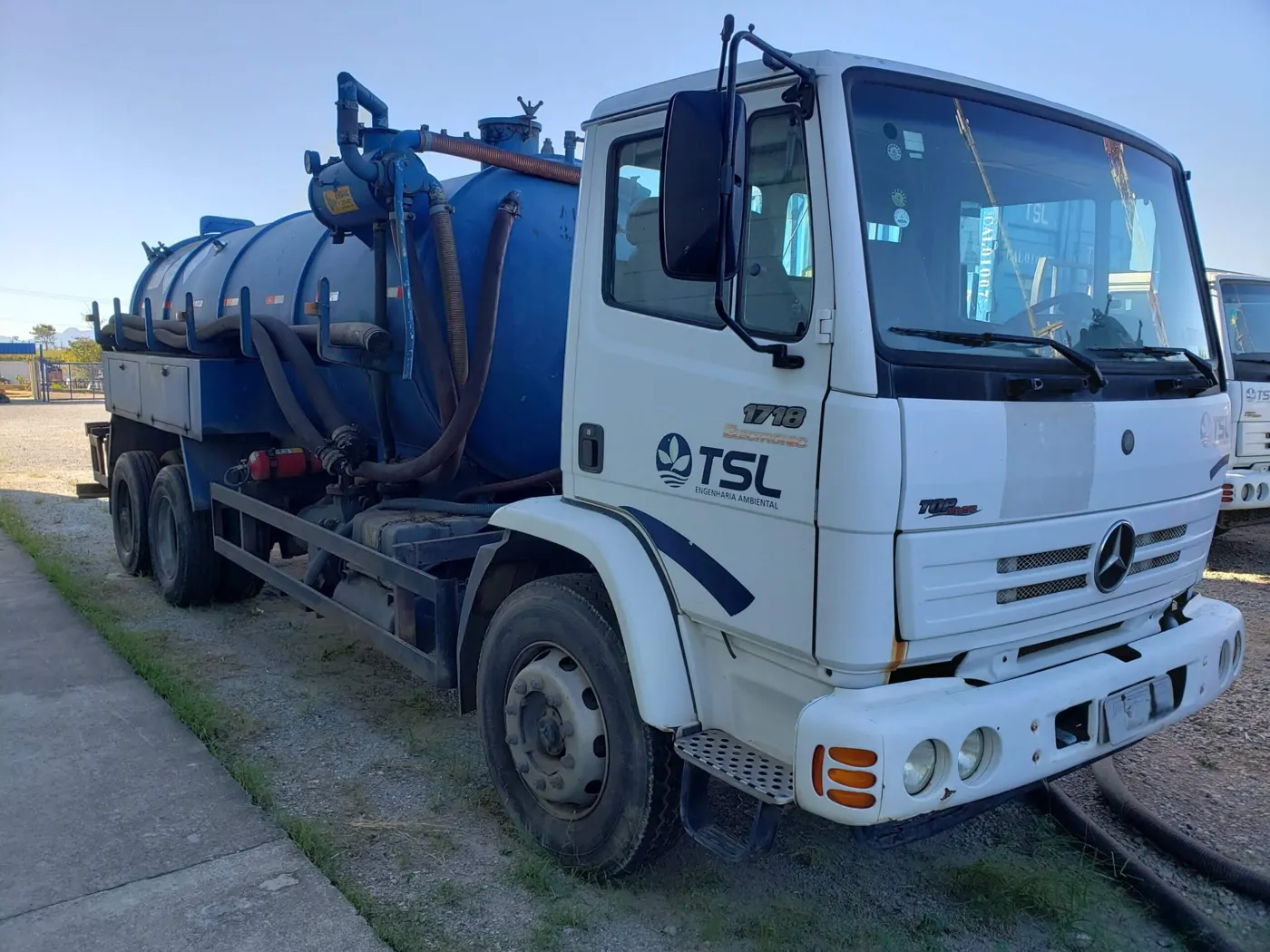
How it works: jetting and suction in the same operation
The crew positions the water jetting hose at the cleaning point, which may be a blocked pipe, a separator box or the bottom of a tank. The high-pressure jet breaks up compacted or encrusted material. Immediately afterwards, the suction hose collects the mixture of water and waste into the truck's tank. Work progresses without loose material building up on site and without switching equipment.
Vacuum truck, hydrovac or water jetting unit: which to choose
| Situation | Recommended equipment |
|---|---|
| Liquid, sludge or already loose waste to be collected and transported | Vacuum truck |
| Waste that is adhered, compacted or blocking a line, and that also needs to be collected | Hydrovac truck |
| Scale in heat exchangers, tubes and surfaces, without a large volume of waste to collect | Hydroblasting or water jetting unit rental |
In practice: if the material is already loose, a standard vacuum truck is enough. If it is adhered or causing a blockage, a hydrovac is required.
Industrial applications
- Unblocking industrial lines and piping.
- Cleaning of separator boxes and drainage systems.
- Removal of compacted sludge from tanks and pits.
- Cleaning of effluent networks.
- Waste collection at points with scale buildup.
- Response to environmental emergencies.
Waste transport and licensing
Transporting industrial waste requires specific licensing. The TSL fleet operates with:
- ANTT (Brazilian land transport agency) license for the transport of hazardous goods.
- Authorization for Class I (hazardous) and Class II waste.
- Drivers with MOPP (hazardous goods transport training for drivers) certification.
- Traceability documentation from collection to final disposal, such as the MTR (waste transport manifest) and, in the state of São Paulo, the CADRI (São Paulo state waste disposal certificate).
Responsibility for the waste is shared between the generator and the transporter. That is why the supplier's regulatory compliance also protects the client. Disposal is handled through waste management.
Operational safety
A hydrovac combines two hazards: the energy of the high-pressure jet and the collection of waste that may be flammable or toxic. The operation requires a crew trained in hydroblasting, control of the work area, specific protective equipment and, when the cleaning point is a confined space, the procedures of NR-33 (Brazilian regulation for confined spaces). TSL operations follow a management system certified to ISO 9001, ISO 14001 and ISO 45001.
Frequently asked questions
What is a hydrovac truck?
It is a combination truck that brings together a high-pressure hydroblasting system and a vacuum suction system. The jet breaks up and clears the waste, and the vacuum removes it and stores it in the truck's tank.
When should a hydrovac truck be used instead of a vacuum truck?
When the waste is adhered, compacted or blocking a pipe. If the material is already loose, a vacuum truck does the job. If it needs to be broken up, the hydrovac performs both steps without two units and two crews.
Can a hydrovac truck transport hazardous waste?
Yes, when licensed. The TSL fleet operates with an ANTT (Brazilian land transport agency) license for hazardous goods, authorization for Class I and Class II waste, and drivers holding MOPP (hazardous goods transport training for drivers) certification.
What happens to the collected waste?
It is transported and disposed of with traceability documentation, from collection to final disposal, under TSL's waste management service.