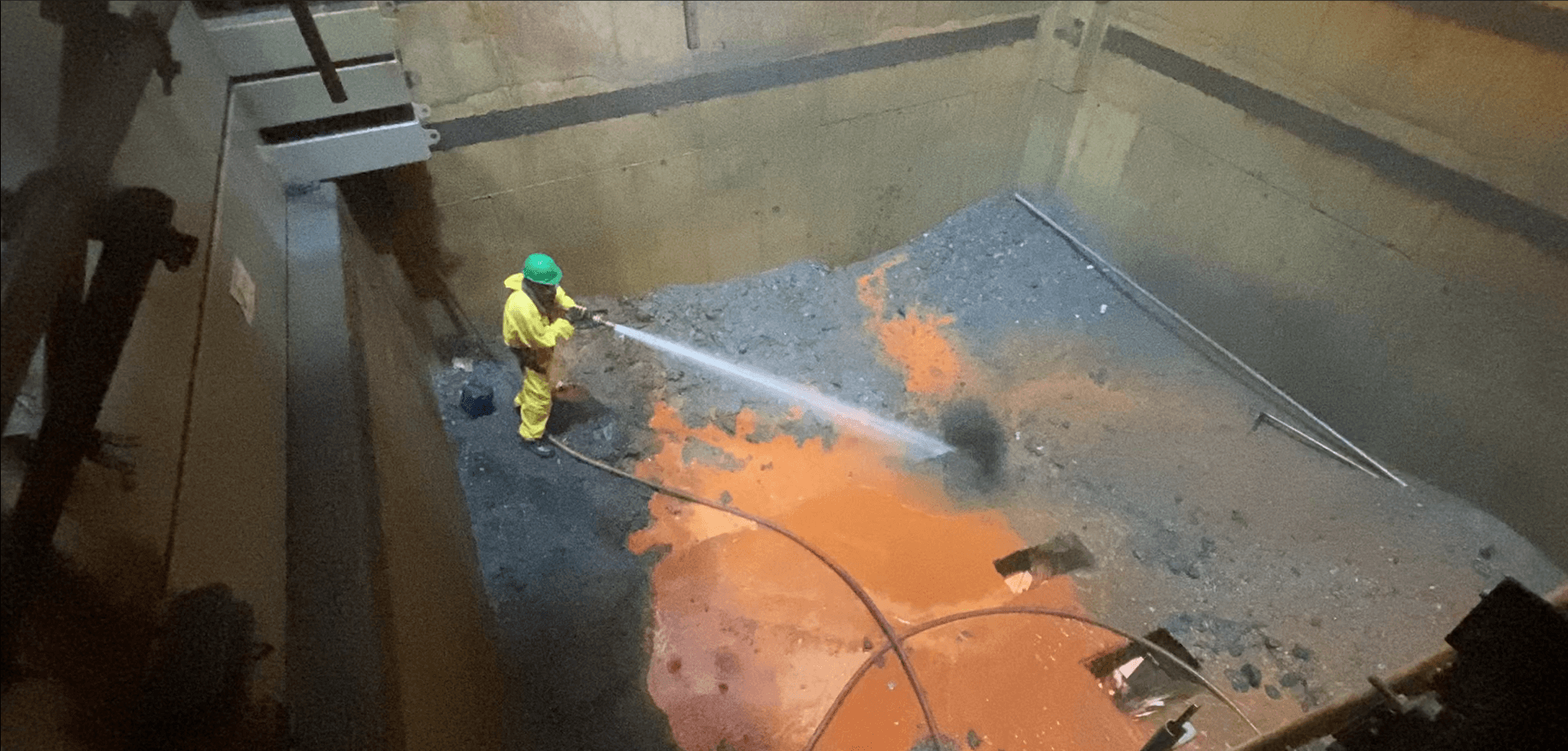
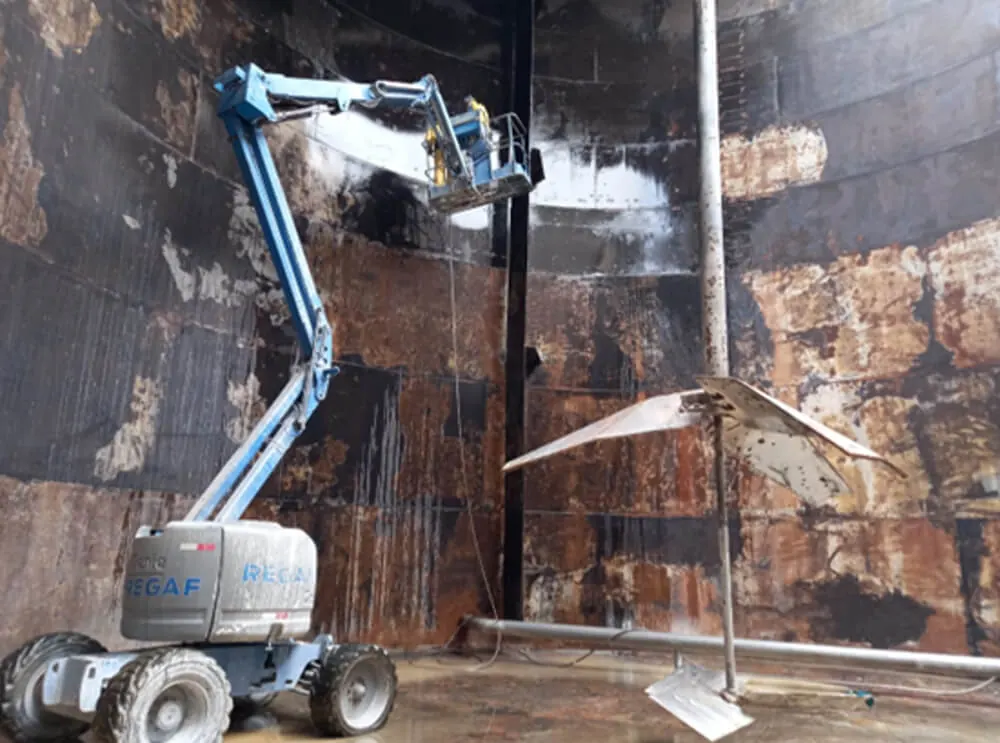
Industrial tank cleaning is the process of removing sediment, sludge, encrustations, and accumulated residue from tanks used to store petroleum, fuels, chemicals, or other fluids. This service is essential to ensure operational safety, preserve the quality of the stored product, and maintain the tank's usable capacity.
Tank cleaning should be performed periodically as part of preventive maintenance or whenever there is: a significant accumulation of sludge or sediment; a need for structural inspection of the tank; a change in the stored product; a shutdown for industrial maintenance; or a risk of product contamination. In sectors such as oil and gas, this operation is fundamental to ensuring the efficiency and safety of the facilities.
The main methods used in cleaning industrial tanks are: Manual cleaning: Performed by teams specialized in confined spaces, using tools, pneumatic pumps, and hydro-jetting. Mechanized cleaning: Uses suction, pumping, and hydro-jetting equipment to remove residues more efficiently. Robotic cleaning: Employs remotely controlled robots to remove sludge and sediments without the need for human entry into the tank. Each method is chosen according to the type of tank, residue present, and operating conditions.
Tank cleaning services can be applied to different types of industrial equipment, such as: oil tanks, fuel tanks, chemical tanks, industrial storage tanks, tanks on ships and vessels, and tanks on offshore platforms.
In many cases, tank cleaning requires the removal of the stored product and a temporary interruption of operations to ensure safety. However, modern mechanized and robotic cleaning techniques can significantly reduce equipment downtime.
Yes. Cleaning industrial tanks is considered a high-risk activity because it often takes place in confined spaces and potentially explosive environments. Therefore, the service should be performed by specialized companies with trained teams and equipment certified for classified areas.
Specialized companies possess: a team trained for work in confined spaces, appropriate industrial equipment, certified safety procedures, and proper management of industrial waste. This ensures that cleaning is carried out safely, efficiently, and in compliance with environmental and operational standards.
Yes. TSL has experience in performing offshore tank cleaning on oil platforms, FPSOs, and maritime units, using specialized equipment and teams trained for onboard operations.