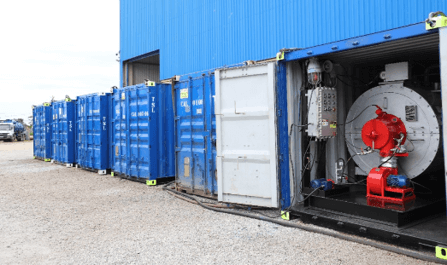
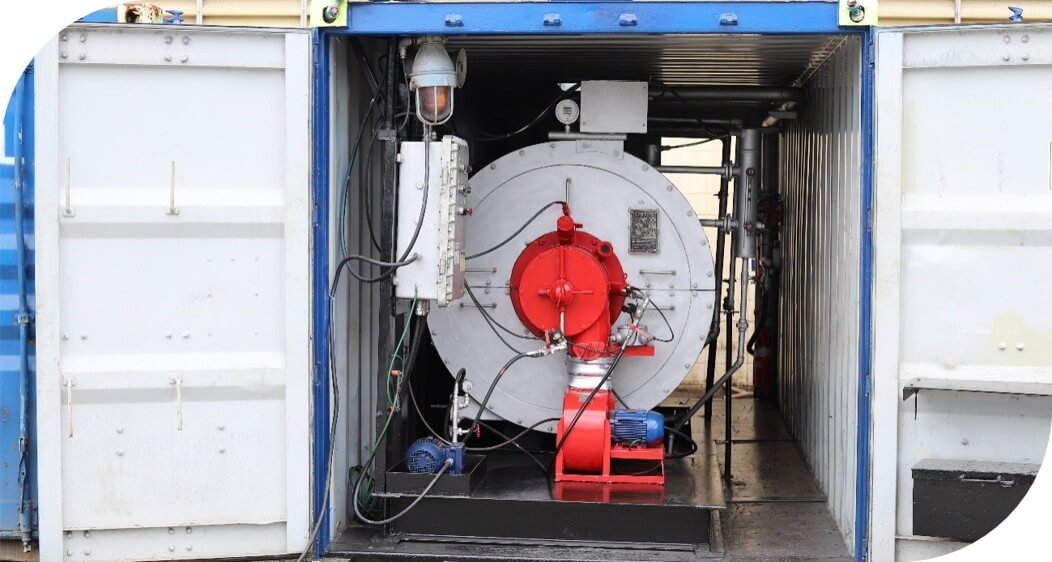
Boiler rental and operation: what to define before hiring
Sizing the boiler correctly before mobilization avoids undersized equipment that cannot sustain the process, or oversized equipment that burns fuel unnecessarily. The points below are the basis of any rental request.
Technical data for the specification
- Steam demand in kg/h: consumption at the point of use, considering peaks and not just the average. In inerting and steam cleaning, demand varies with the volume of the equipment and the duration of each stage.
- Working pressure in psi and bar: the pressure required at the point of consumption, plus losses in the distribution line. As a conversion reference, 1 bar is about 14.5 psi.
- Fuel: diesel, natural gas or another fuel available on site, with supply and storage logistics defined for the whole period.
- Area and utilities: space for the boiler and its peripherals, a level base, feedwater of adequate quality, electrical power, the steam line route and the condensate destination.
- Schedule: mobilization, operation and demobilization dates, and whether the regime will be continuous or in shifts.
NR-13 requirements
The Brazilian standard NR-13 covers boilers, pressure vessels and piping, and it also applies to rented equipment. Among the main requirements:
- Qualified operator: the boiler must be operated by a professional with the Boiler Operation Safety Training set out in the standard, complemented by a practical internship.
- Data book and safety log: the boiler documentation, with design data, characteristics and history, must be available at the operating site, together with the record of occurrences.
- Safety inspections: initial, periodic and extraordinary, with reports and intervals defined by the standard according to the equipment category.
- Safety devices: safety valve, pressure gauge and level control system in working condition.
- Installation: an installation area that meets the clearance, ventilation and exit conditions set out in NR-13.
When rental with operation makes sense
Rental with operation meets temporary demand without investing in an owned asset or training a dedicated crew. The most common scenarios are:
- Maintenance shutdowns: steam for inerting, heating viscous products and cleaning tanks and piping during the shutdown window.
- Demand peaks: supplementing installed capacity during periods of above-normal production.
- Contingency: temporary replacement of the plant boiler during repair, inspection or equipment replacement.
With operation included, responsibility for the safe running of the boiler stays with those who know the equipment, and the plant team can focus on its own process. To compare equipment options and applications, see steam boiler rental.