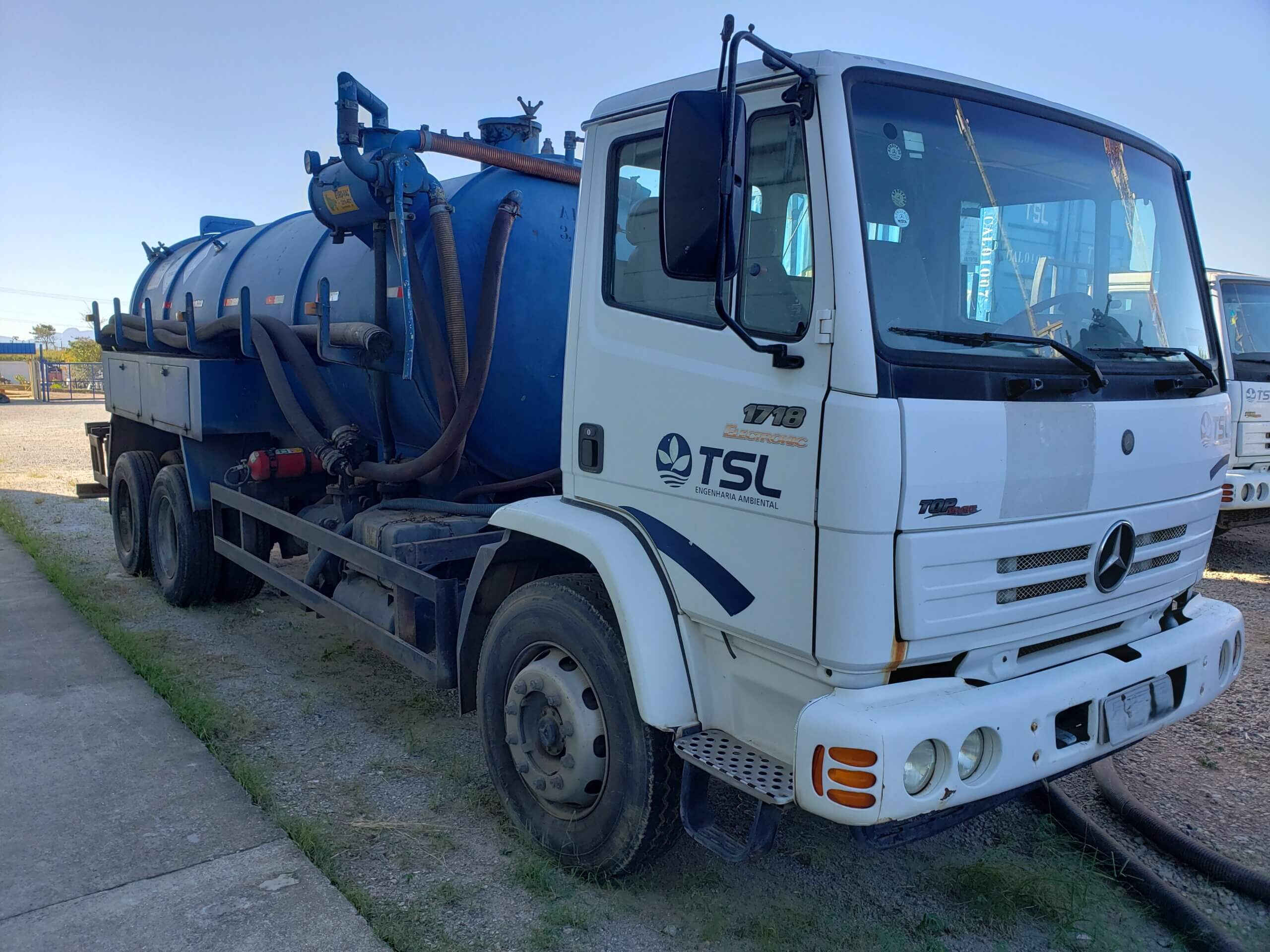
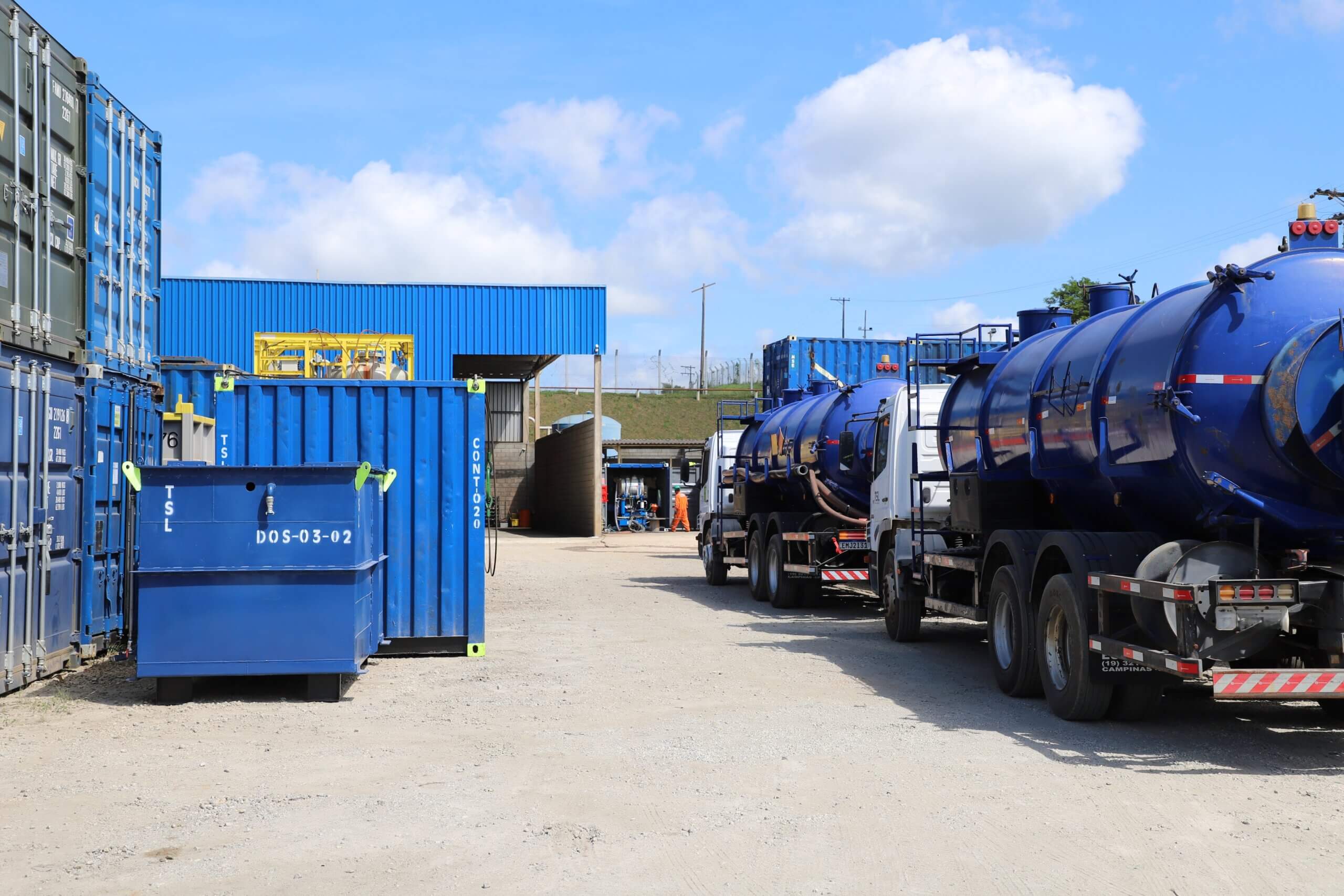
A vacuum truck is a vehicle with a tank and a high-vacuum pump that suctions, stores and transports liquids, sludge and pasty waste. It is used for cleaning tanks, separator boxes, treatment plants, wells and drainage systems, and in environmental emergencies involving product spills.
A vacuum truck does the job when the material is already loose. When the residue is adhered, compacted or blocking a line, it must be broken up before suction. In that case, the option is the hydrovac truck, which combines water jetting and vacuum in the same operation.
Transporting industrial waste requires licensing and traceability. TSL's fleet operates with an ANTT (Brazilian land transport agency) license for hazardous goods transport, authorization for Class I and Class II waste, drivers with MOPP training (hazardous goods transport training for drivers) and traceability documentation from collection to final disposal, such as the MTR (waste transport manifest). Because responsibility for the waste is shared between generator and transporter, the supplier's documentary compliance also protects the client.
With rental including operation, TSL provides the vehicle, a crew trained for hazardous waste and confined spaces, and disposal of the collected material through waste management. The vacuum truck also supports industrial tank cleaning and hydroblasting by collecting the removed material.
A vacuum truck performs the suction, collection and transport of liquids, sludge and industrial waste. It is used in tank cleaning, separator boxes, drainage systems and environmental emergencies.
A vacuum truck only suctions material that is already loose. A hydrovac truck combines vacuum suction with high-pressure hydroblasting, making it possible to break up and remove adhered material or blockages in the same operation.
Yes, provided it is licensed. TSL's fleet is authorized by ANTT (Brazil's National Land Transportation Agency) to transport Class I (hazardous) and Class II waste, with the appropriate traceability documentation.
The rental can include the equipment with operation, for one-off or continuous demands. TSL provides the vehicle, the trained crew and the disposal of the collected material.
The vehicles have 8 m³ and 12 m³ holding tanks.