

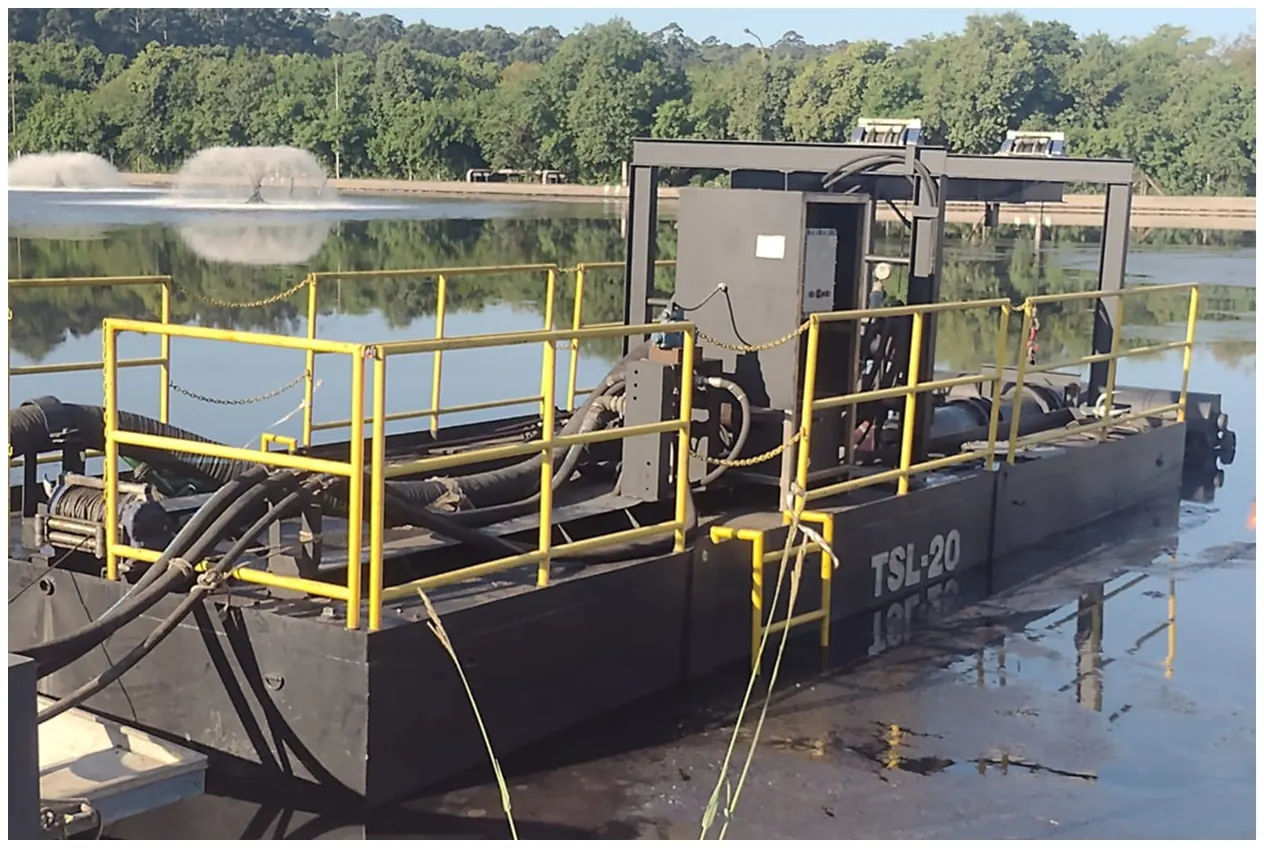
Dredging is the removal of sediment, sludge, sand and other materials accumulated at the bottom of water bodies and of structures that hold liquids. The goal is to recover depth and useful volume, restore flow or remove contaminated material. In industry, dredging is performed in effluent treatment ponds, settling basins, reservoirs, channels and tailings dams.
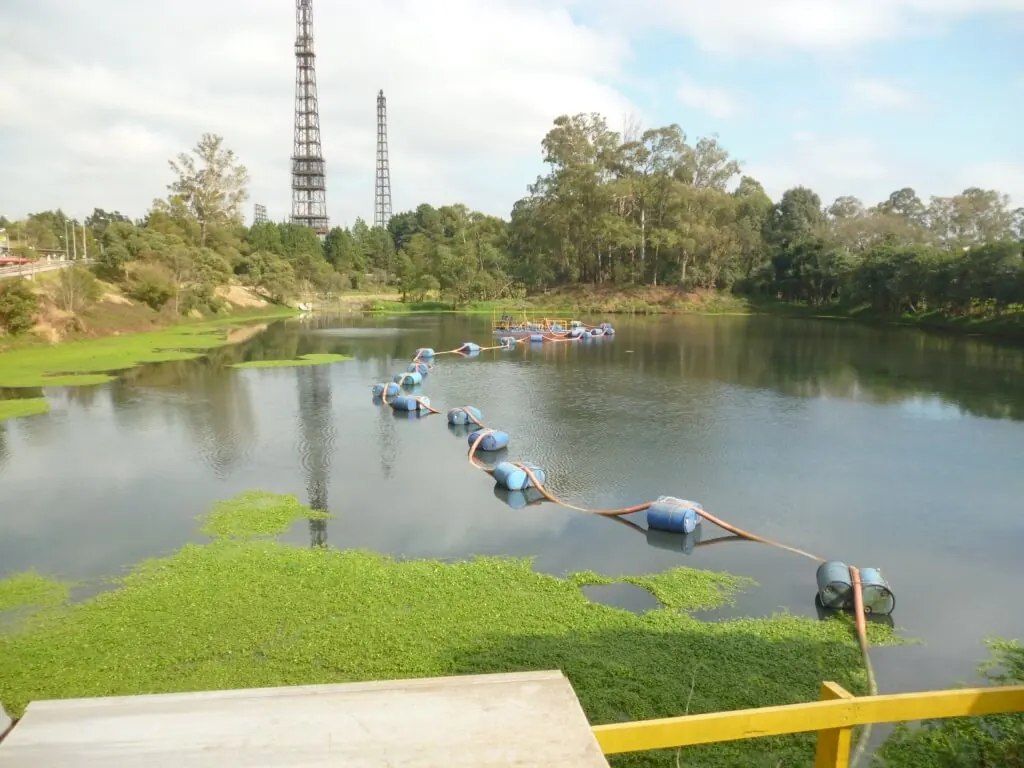
TSL performs industrial dredging with its own barges and suction and discharge dredges, and integrates the service with dewatering of the material and waste management. The client contracts the complete solution: the sediment is removed from the bottom, separated from the water and disposed of with full documentation.
Types of dredging
- Maintenance dredging: removes material that accumulates during normal operation, such as sludge in a treatment pond, and recovers the design volume.
- Environmental or remediation dredging: removes contaminated sediment, with turbidity control and disposal according to the waste class.
- Deepening dredging: increases the depth of a channel, reservoir or basin beyond its original condition.
Each type changes the equipment, the pace of work and the disposal method. That is why dredging always begins with a technical survey.
Where industrial dredging is applied
Effluent treatment ponds
Stabilization, aerated and settling ponds accumulate sludge at the bottom. As the useful volume decreases, the retention time drops and effluent quality deteriorates. Dredging recovers capacity without draining the pond. For pond-focused interventions, see pond desilting.
River dredging
In rivers and channels, dredging removes material deposited on the bed that reduces the flow cross-section or compromises water intake points. The work requires control of sediment dispersion, planning of dewatering areas and attention to the environmental agency's requirements for the water body.
Reservoirs and dams
Industrial and process water reservoirs lose volume to siltation. Scheduled removal keeps the reserve available and prevents sediment from reaching pumps and piping.
Mining tailings and process basins
In process and tailings basins, dredging removes settled material to recover volume, allow inspections or feed dewatering and reuse stages.
Suction and discharge: how the dredge works
Hydraulic suction and discharge dredging is the method used in most industrial applications. The dredge, mounted on a dredging barge, positions the suction point at the bottom. The pump draws in the mixture of sediment and water and discharges it through a pipeline to the dewatering or treatment area.
The main advantage is working on the water surface, with the structure in operation. There is no need to drain the pond or interrupt effluent treatment. At sites with restricted access or very compacted material, suction can be combined with other means of breaking up the sediment.
Industrial dredging steps
- Bathymetric survey: measures depth and the volume of accumulated sediment, and defines the area and volume to be removed.
- Material characterization: analysis of the sediment to determine the waste class and the permitted disposal route.
- Mobilization: setup of the barge, the discharge line and the dewatering area.
- Dredging: suction of sediment from the bottom, with the structure in operation.
- Solid-liquid separation: dewatering in geobags or in centrifuges as part of sludge thickening. The separated water returns to the treatment system.
- Disposal: transport and disposal of the dewatered material, with MTR (waste transport manifest) and disposal certificate, under waste management.
Dredging, desilting and pond cleaning: what is the difference
| Term | What it means |
|---|---|
| Dredging | The method: removing material from the bottom with equipment, usually by suction. |
| Desilting | The goal: recovering depth and volume lost to sediment buildup. It is carried out by dredging. |
| Pond cleaning | The complete intervention in the treatment pond: dredging of the sludge, dewatering and disposal. |
Standards and licensing
Dredging involves waste and, often, intervention in a water body. The main points:
- Waste classification: the sediment is classified under ABNT NBR 10004 (Brazilian solid waste classification standard) as Class I or Class II, which determines transport and disposal.
- Dredged material: CONAMA Resolution 454/2012 sets guidelines for the characterization and management of material to be dredged in waters under Brazilian jurisdiction.
- Licensing: the intervention and the dewatering area may require authorization from the state environmental agency, depending on the site and the volume.
- Traceability: Law 12.305/2010 (Brazilian National Solid Waste Policy) requires the path of the waste to be documented up to final disposal.
TSL operates with a management system certified to ISO 9001, ISO 14001 and ISO 45001. See our certifications.
Industries served
Oil and gas, petrochemical, mining, pulp and paper, chemical, food and pharmaceutical industries, as well as sanitation. In all of them, dredging is planned to take place with the plant in operation and with the waste disposed of under the same contract.
Read also
Frequently asked questions
What is industrial dredging?
It is the removal of sediment, sludge and solids accumulated at the bottom of ponds, tanks, reservoirs or effluent treatment structures, using pumping equipment and solid-liquid separation systems.
What is dredging of industrial ponds for?
To remove sediment that has built up over time, restore the useful volume of the ponds and maintain the efficiency of effluent treatment systems.
Does the pond have to be taken out of operation for dredging?
No. Barge dredging works on the water surface and draws material from the bottom while the pond remains in operation, without draining the structure.
What happens to the material removed by dredging?
It undergoes solid-liquid separation in geobags or centrifuges. The liquid phase returns to the treatment system and the solids are sent for proper disposal, with traceability.
Does dredging require an environmental license?
It depends on the water body, the site and the material. In general, the intervention and the disposal of dredged material go through the competent environmental agency, and the sediment must be characterized before disposal.
Which industries use industrial dredging services?
Petrochemical, mining, pulp and paper, chemical, food and pharmaceutical, especially in their effluent treatment systems, as well as sanitation operations.