

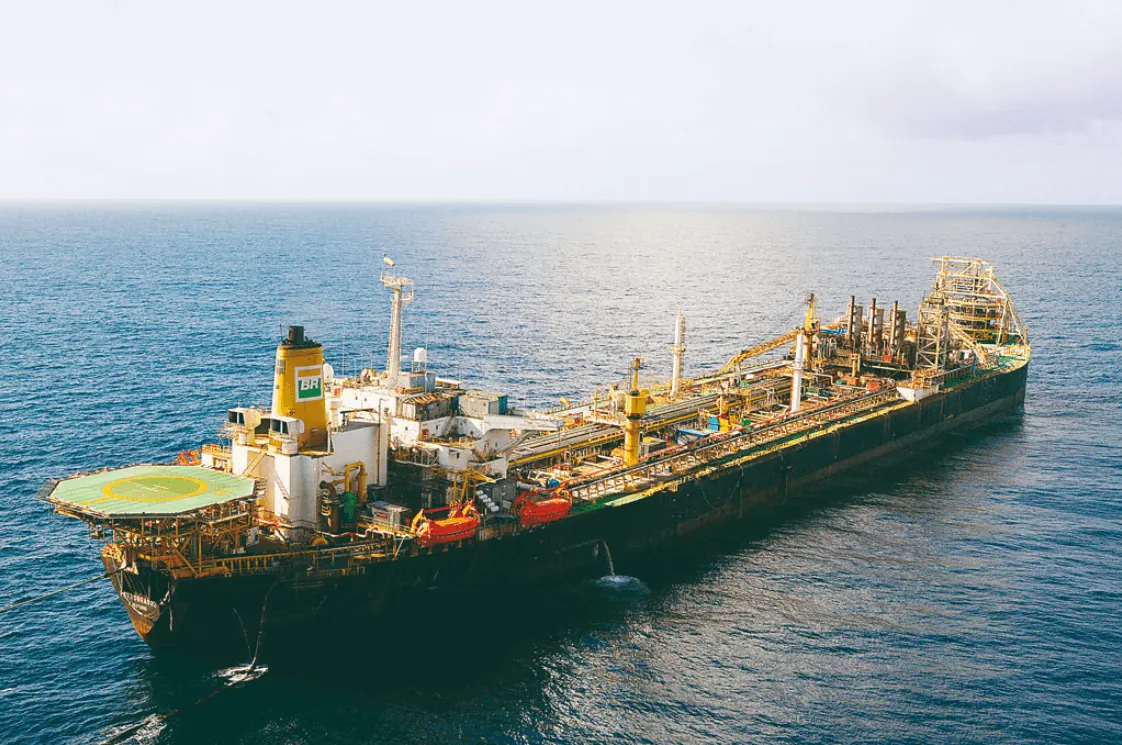
What is an FPSO
FPSO stands for Floating Production, Storage and Offloading: a floating unit that produces, stores and transfers oil. It receives fluid from the wells, separates oil, gas and water in the process plant installed on deck and stores the treated oil in the hull tanks until it is offloaded to shuttle tankers. In practice, an FPSO combines a process plant and a large tank farm in the same hull, operating continuously at sea.
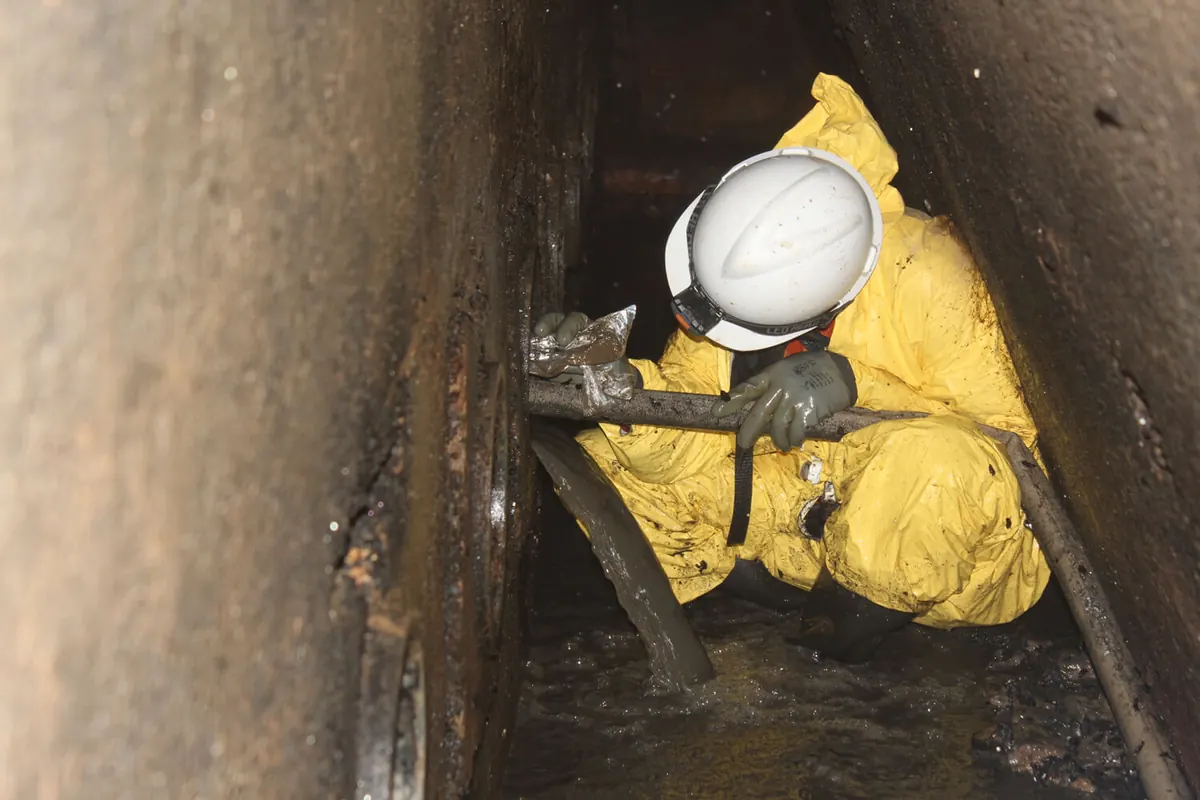
That is why FPSO tank cleaning is one of the most demanding fronts of offshore tank cleaning: the tanks are large and complex in layout, and the work is done on board a unit that keeps producing.
FPSO tanks and the residue in each one
Each type of tank builds up a different residue, and the cleaning plan takes into account the product, the volume of sludge and the access to each tank.
| Tank | Function | Typical residue |
|---|---|---|
| Cargo | Stores produced oil until offloading | Crude oil sludge settled on the bottom |
| Slop | Receives oily water and washing residues | Emulsions, oil and settled sludge |
| Ballast | Controls the unit's draft and stability | Sediment and, over time, scale |
| Produced water | Receives the water separated from the oil in the process | Residual oil, solids and mineral scale |
| Fuel | Stores the diesel consumed by the unit | Sludge, water and bottom sediment |
Why FPSO tanks need cleaning
Cleaning is not an end in itself. It clears the way for other activities on the unit:
- Inspection and class survey. Tanks undergo periodic inspections of the structure and coatings, including the surveys required by the classification society. For an inspection to take place, the tank must be clean, gas free and released for entry.
- Maintenance. Structural repairs, coating restoration and work on internal fittings depend on a clean tank with a safe atmosphere.
- Change of product or service. When a tank changes function, the residues of the previous product must be removed.
- Sludge buildup. Sludge reduces usable storage volume and can impair loading and unloading operations.
Cleaning is the step that sets the timeline for the inspection campaign. A delay here pushes back the unit's entire maintenance schedule, which is why planning starts before mobilization.
Offshore logistics from Macaé
FPSO tank cleaning depends on logistics: beds on board, shipping equipment offshore, storing waste in drums or tanks and transferring it ashore. From its operational base in Macaé (Rio de Janeiro state), TSL mobilizes crews and equipment to the Campos Basin and to other locations across Brazil. TSL's engineering team develops the work plan for each unit, taking into account the number of tanks, the release sequence and the deck space available.
How FPSO tank cleaning works
- Residual product removal. Any remaining oil or oily water in the tank is removed with pneumatic pumps.
- Gas freeing and inerting. The tank atmosphere is treated to eliminate hydrocarbon vapors. TSL performs inerting with saturated steam, generated by fire-tube boilers with flow rates from 650 to 10,000 kg/h and pressures up to 300 psi (21 bar), or with nitrogen, in accordance with NFPA 69. In addition to inerting, steam also carries away oil residues stuck to the walls.
- Ventilation and release. The tank is ventilated and the atmosphere is measured until it is safe for entry.
- Sludge removal. Sludge settled on the bottom is removed manually, mechanically or robotically and packed for transfer.
- Surface hydroblasting. Walls, bottom and internal structures are washed with high-pressure water jetting to the cleanliness standard required for inspection.
- Offloading and disposal. The waste goes ashore with documentation and is treated and disposed of.
Confined space and platform safety: NR-33 and NR-37
Work on board follows NR-37, the Brazilian standard for safety and health on oil platforms, which includes how the cleaning crew works alongside the unit's operations. Inside the tanks, the confined space procedures of NR-33 apply: atmosphere measurement, ventilation and entry permits. The hazards are well known: toxic gases, flammable or explosive atmospheres, oxygen deficiency and hydrocarbon vapors. That is why the atmosphere is monitored throughout the job, not only at release.
On board, emergency response has constraints that do not exist onshore. TSL professionals are trained for confined space operations and are supported by dedicated support crews and rescue teams. The company maintains a record of 15 years without lost-time accidents, and its operations follow ISO 9001, ISO 14001 and ISO 45001.
Manual, mechanized and robotic sludge removal
The choice of method depends on the tank and the residue. TSL's manual, mechanized and robotic tank cleaning combines all three. Mechanized and robotic systems complement manual cleaning: they reduce operator entry into the confined space, lower operational risk and shorten execution time. On an FPSO, where every hour of an embarked crew counts and exposure inside the tank is the main hazard, this combination makes a difference in both schedule and safety.
Hydroblasting inside the tank
After the sludge is removed, scale and adhered residues are cleared with industrial hydroblasting. TSL operates high-pressure water jetting equipment with pressures up to 40,000 psi (2,760 bar), depending on the application. On surfaces that will undergo thickness or coating inspection, washing leaves the steel and the paint visible to the inspector.
Waste management and disposal
Sludge and oily water removed from the tanks are packed on board in drums or dedicated tanks and transferred ashore. From there they enter TSL's waste management service, with environmentally sound collection, treatment and disposal and traceability documentation, such as the MTR (Brazilian waste transport manifest). Responsibility for the waste is shared between the generator and the service provider, and this documentation protects the unit's operator.
The aqueous phase is directly related to another TSL service: produced water treatment, which treats the same oily water generated in the FPSO process.
Part of the unit's offshore maintenance
Tank cleaning is often tied to other offshore maintenance fronts, such as cleaning heat exchangers and process vessels, inerting piping and preparing surfaces for painting. Bringing these fronts together under a single provider reduces the number of crews on board and simplifies planning of beds on board. For tanks on vessels that carry oil, see also oil tanker tank cleaning.
Frequently asked questions
Which FPSO tanks need cleaning?
Cargo tanks, where crude oil sludge builds up on the bottom; slop tanks, which receive oily water and washing residues; ballast tanks, with sediment and scale; produced water tanks, with residual oil, solids and mineral scale; and the unit's fuel tanks.
Why is FPSO tank cleaning done before inspection?
Because the structure and coatings can only be inspected once the tank is clean, gas free and released for entry. That is why cleaning sets the timeline for the unit's inspection and maintenance campaign.
How is the tank released for crew entry?
After the residual product is removed, the atmosphere is treated by inerting, with saturated steam or nitrogen, and then ventilated. Entry follows NR-33 (Brazilian confined space standard), with oxygen, flammable gas and toxic gas measurements and an entry permit.
Can FPSO tank cleaning be mechanized or robotic?
Yes. TSL performs manual, mechanized and robotic cleaning. Mechanized and robotic systems complement manual cleaning and reduce the time people spend inside the confined space.
What happens to the sludge removed from the FPSO?
The sludge is packed on board in drums or dedicated tanks, transferred ashore and then treated and disposed of with traceability documentation under TSL's waste management service.