

TSL's environment area handles what builds up with industrial operation: sediment and sludge in ponds and basins, waste from cleaning and maintenance, and contaminated soil and groundwater. The services are integrated. Dredged material is dewatered, sludge is thickened and the waste leaves with a defined destination and documentation at every step.
TSL has more than 40 years of experience and a management system certified to ISO 9001, ISO 14001 and ISO 45001.
In practice, a single contract can bring several steps together: dredging a treatment pond, dewatering the sludge in geobags or centrifuges, licensed transport and final disposal with the documentation required by law.
Dredging and ponds
Industrial dredging
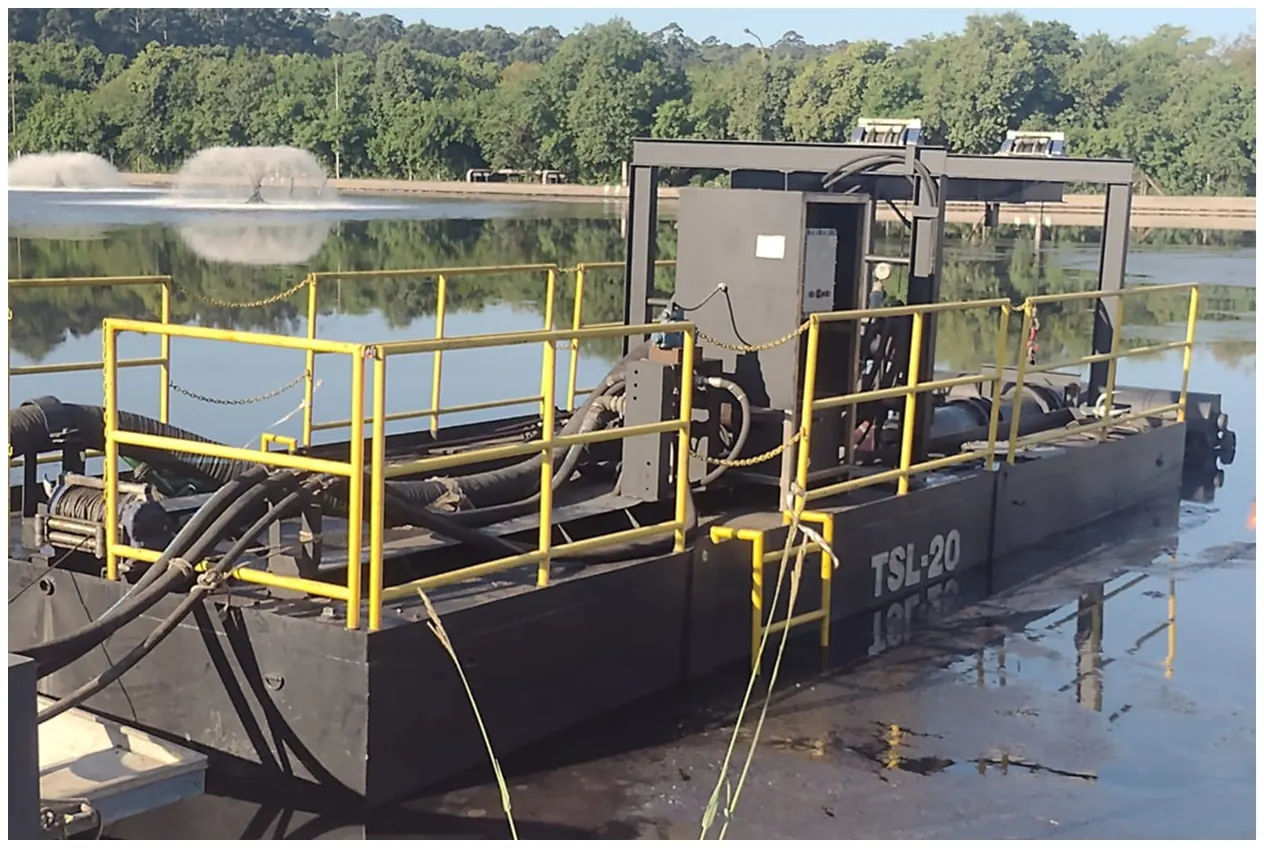
Removal of sludge, sand and tailings from treatment ponds, settling basins, reservoirs, channels and tailings dams, with TSL's own barges and suction and discharge dredges, without stopping operations. It can be maintenance dredging, to recover design volume, or environmental dredging, with turbidity control when removing contaminated sediment.
Pond desilting
Recovers the usable volume of stabilization ponds, settling tanks and reservoirs without draining them, with bathymetry, sludge dewatering and disposal.
Dredging barge
TSL's own barge for mechanized sediment removal in ponds, basins and effluent treatment plants, with solid liquid separation of the removed material.
Sludge treatment
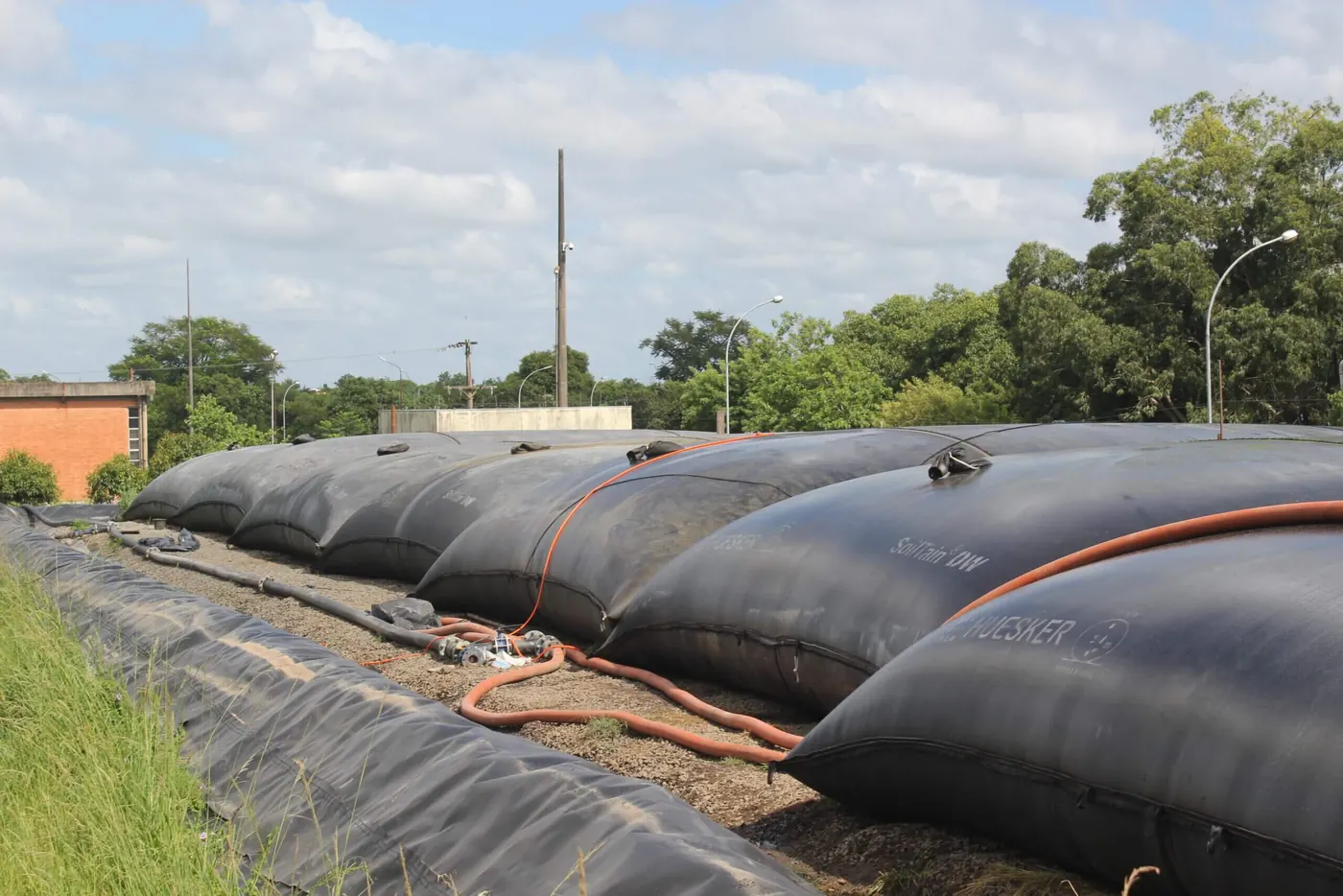
Geobags
Geotextile bags for sludge dewatering. TSL implements the complete system: dredging, pumping, chemical conditioning of the sludge with polymer control and operation of the dewatering process.
Sludge thickening
Concentration of solids with decanter centrifuges, for continuous operation, or geobags, for large one-off volumes. Less water means lower transport and disposal costs. When an even drier material is needed, dewatering removes more moisture after thickening.
Waste management
Waste management
Classification under ABNT NBR 10004, collection, ANTT (Brazilian land transport agency) licensed transport for Class I and Class II waste, MTR issuance and final disposal. Because waste management is integrated with industrial cleaning, dredging and sludge thickening, the waste generated in each job already leaves with a defined destination.
Waste disposal
Routing to recycling, co-processing, incineration or a licensed industrial landfill, according to the material class, with an MTR and a certificate of final disposal.
Waste incineration
Coordination of collection, transport and disposal by incineration at licensed plants, suited to Class I hazardous waste and materials that require controlled thermal destruction.
Contaminated sites
Environmental investigation
Preliminary assessment, with data gathering and a conceptual model of the problem, confirmatory and detailed investigation with soil and groundwater drilling and sampling, and human health risk assessment, following the steps required by CETESB (São Paulo environmental agency) and CONAMA.
Contaminated site remediation
In situ technologies such as pump and treat, multiphase extraction, AS/SVE and chemical oxidation, and on site technologies such as biopiles and thermal desorption, to rehabilitate soil and water.
Frequently asked questions
Which environmental services does TSL offer?
Industrial dredging and pond desilting, sludge dewatering and thickening with geobags and centrifuges, waste management, disposal and incineration, environmental investigation and remediation of soil and groundwater.
Does the pond have to be emptied for dredging?
No. TSL dredges ponds, basins and reservoirs with its own barges and suction and discharge dredges, without emptying the structure and without stopping operations.
How is waste disposal documented?
With an MTR (waste transport manifest) and a certificate of final disposal, which prove treatment at a licensed facility, as required by Brazilian Law 12,305/10. TSL works only with licensed destinations and provides full traceability documentation to the client.