

What is industrial wastewater treatment
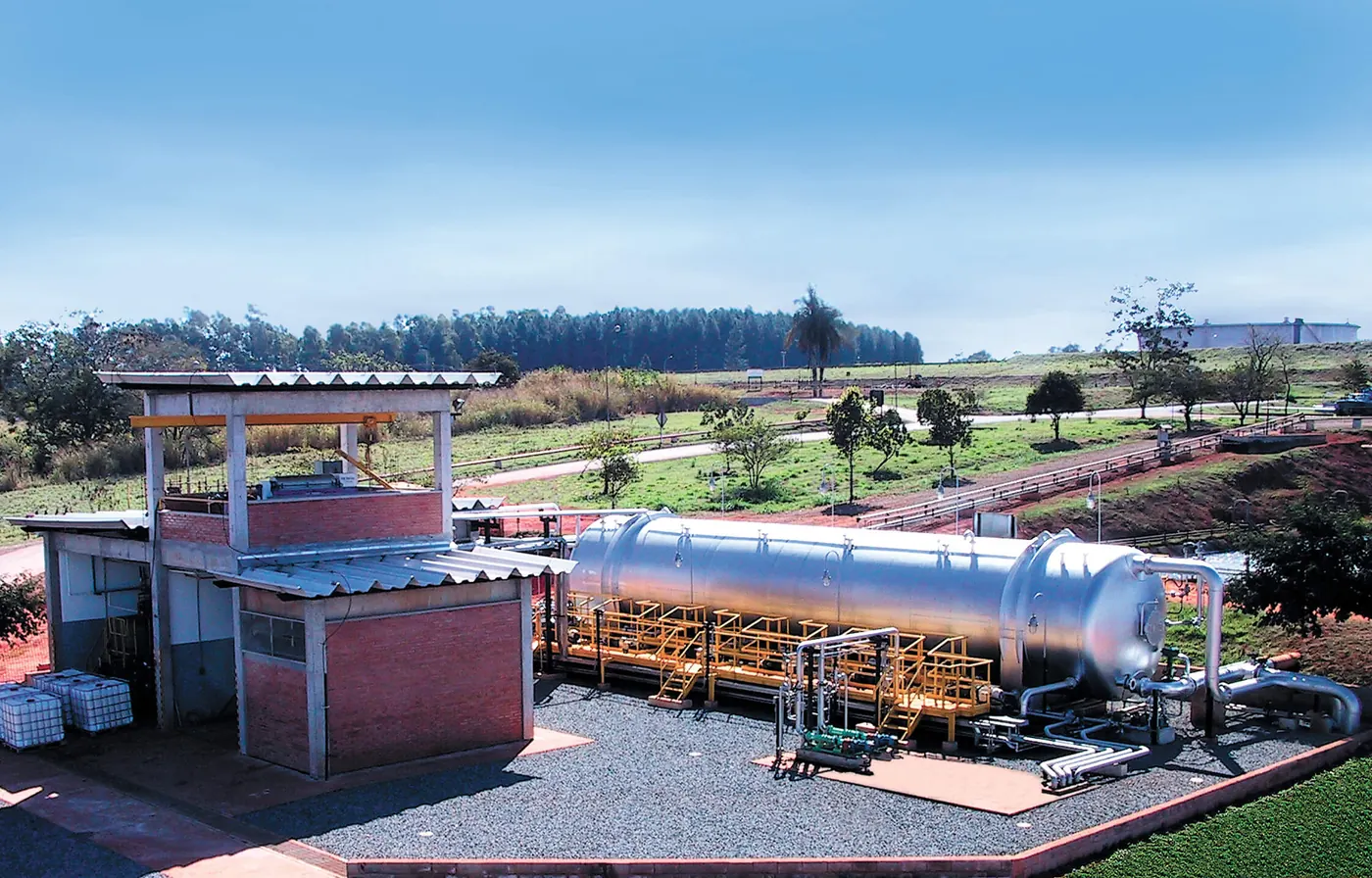
Industrial wastewater treatment is the set of physical, chemical and biological processes that removes oils, grease, suspended solids and other contaminants from the water generated by production processes. The goal is to bring that water within the discharge, reuse or reinjection standards required by environmental regulations. These processes are grouped in a wastewater treatment plant (WWTP).
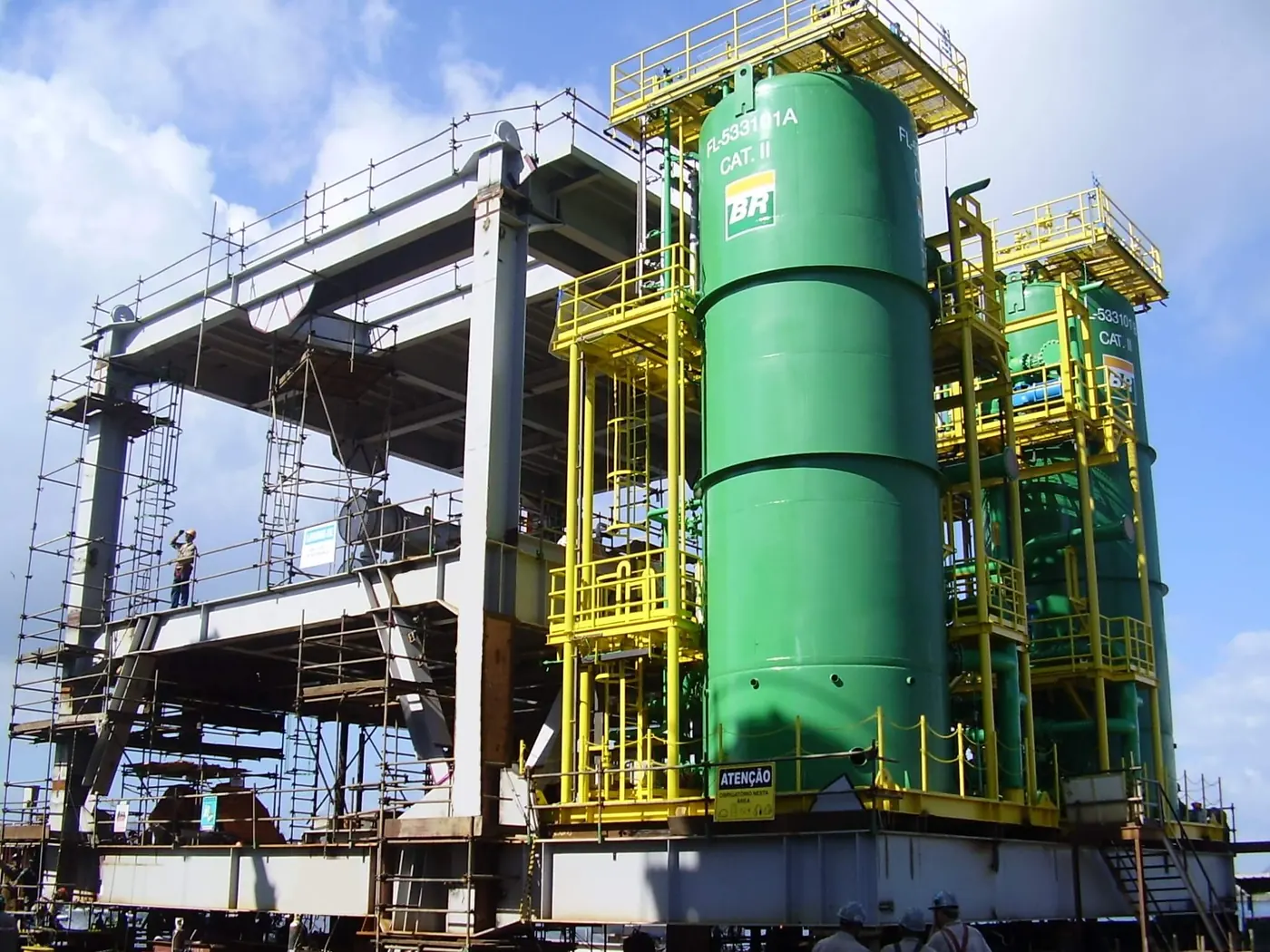
Every effluent has its own composition, so there is no standard plant. What repeats is the logic: first separate what comes out easily, then what requires technology, and then handle the waste that remains. The solids and oil removed from the water become sludge and oily sludge, which must be thickened, transported and disposed of in compliance with regulations.
Stages of an effluent treatment plant
The sequence below is the most common for effluents containing oil and solids. Not every plant uses every stage, and the order may vary depending on the process.
- Preliminary treatment. Screening, grit removal and flow and load equalization. It protects downstream equipment and prevents peaks that bring down system efficiency.
- Primary separation. Removes free oil and coarse solids, usually by gravity, in oil water separators, settling tanks or hydrocyclones.
- Flotation. Removes dispersed and emulsified oil and the fine solids that primary separation did not remove. Air or gas microbubbles attach to the contaminants and carry them to the surface, where they are collected.
- Polishing or biological treatment. Filtration, membranes or biological processes, when the water's destination requires higher purity or when there is a dissolved organic load.
- Sludge treatment. Thickening and dewatering of the separated material, to reduce volume and disposal cost.
- Disposal. Waste classification, licensed transport and delivery to a licensed disposal facility, with traceability documentation.
The stages depend on one another. A flotation unit with low efficiency overloads polishing and biological treatment. Sludge that is not removed reduces the useful volume of tanks and ponds and worsens the quality of the outlet water. That is why the diagnosis of a WWTP looks at the entire chain, not only at the point where the problem shows up.
Discharge, reuse or reinjection: the destination defines the treatment
Before choosing equipment, you need to know where the treated water is going. Each destination has a different requirement:
- Discharge. The water must meet the environmental agency's limits for the receiving body or the sewer network. For produced water discharged by platforms in Brazil, the oil and grease parameters follow CONAMA Resolution 393/07.
- Reuse. The water returns to the industrial process, and the required quality depends on the intended use, such as washing, cooling or utilities.
- Reinjection. In oil production, the water returns to the reservoir and usually requires polishing and filtration to reach high purity levels.
The oil and grease content at the outlet, the flow rate and the available space define the combination of technologies.
Droplet size defines the technology
In oily effluents, equipment selection depends mainly on the diameter of the oil droplets. The smaller the droplet, the more energy and technology the separation requires.
| Type of oil | Droplet size | How it is removed |
|---|---|---|
| Free oil | Usually above 150 µm | Natural gravity separation |
| Dispersed oil | Between 20 µm and 150 µm | Systems that accelerate separation, such as flotation |
| Emulsified oil | Below 20 µm | Emulsion breaking and flotation |
| Dissolved oil | Microscopic or soluble fractions | Polishing and highly selective physical barriers |
Each range is covered in detail in oily water treatment.
How TSL works in each stage
Oil separation and flotation
Flotation is at the core of TSL's work with effluents. The company designs, supplies and maintains flotation systems with DGF, IGF and CFU technologies, sized to achieve TOG (oil and grease content) below 20 ppm. For oil-bearing streams, the solutions are in oily effluent treatment. To understand the equipment within the plant, see flotation unit for effluent treatment and dissolved air flotation (DAF) unit.
In dissolved gas flotation, pumps with a dual-function impeller dissolve the gas into the stream and generate microbubbles of controlled diameter, from 1 µm. The equipment can operate fully sealed, with no emission of odors or aerosols, and uses stainless steel, Duplex and Super Duplex depending on how aggressive the fluid is.
Produced water and offshore operations
In oil production, the water that comes up with the oil carries hydrocarbons, salts and solids and must be treated for discharge or reinjection. For discharge by platforms, CONAMA Resolution 393/07 applies. TSL works in produced water treatment and with the Compact Flotation Unit (CFU), which reduces installed weight by up to 80% compared with conventional systems.
Sale, rental and operation of units
TSL sells, rents and operates produced water and oily water treatment units. The Veirsep-Plus horizontal multi-cell flotation unit handles large flow rates, up to 1,650 m³/h, in refineries, petrochemical plants, oil bases and terminals. The Cyclosep vertical flotation unit handles flow rates of up to 166 m³/h and has a wave absorber system for use on FPSOs. Rental packages include hydrocyclones, flotation units and several types of filters. For existing systems, TSL performs retrofits from induced gas flotation to dissolved gas flotation.
Maintenance and efficiency recovery
When the oil content at the outlet starts to rise, the cause is usually in the flotation unit: accumulated oily sludge, scale on the internals, failure in microbubble generation or inadequate chemical dosing. TSL performs chemical cleaning of flotation units and vessels, removal of oily sludge and solids, internal hydroblasting and support for maintenance shutdowns and commissioning, with disposal of the removed waste.
Sludge, ponds and disposal
Separated sludge has a high water content. Sludge thickening concentrates the solids by centrifugation or in geobags, geotextile bags in which the water drains and the solids are retained, with volume reductions that can exceed 80%, depending on the sludge. The clarified liquid phase can return to the plant. In stabilization and settling ponds that accumulate sediment, pond desilting is carried out with a dredging barge, without emptying the structure.
At the end of the chain, waste management classifies the material under ABNT NBR 10004, handles transport under an ANTT (Brazilian land transport agency) license for hazardous goods and tracks each load with an MTR (waste transport manifest), a CADRI (waste movement certificate) in the state of São Paulo and a final disposal certificate.
DAF, DGF and CFU: which flotation to use
| Criterion | DAF | DGF | CFU |
|---|---|---|---|
| How bubbles are generated | Air dissolved under pressure in a recycle stream, released as microbubbles when returning to atmospheric pressure | Gas dissolved in the water by special pumps that control the size of the microbubbles | Dissolved gas combined with centrifugal force |
| Residence time | Longer, in a flotation tank or vessel | Varies with the vessel design | Short |
| Space and weight | Requires more area | Compact or multi-cell vessels | Up to 80% less installed weight than conventional systems |
| Typical application | Industrial effluents with oils, grease and suspended solids, in onshore plants | Oily water and produced water, including with process gas | Platforms and FPSOs, where space and weight are critical |
The choice depends on droplet size, flow rate, available space and the required oil content at the outlet. For large processing volumes, IGF is also used, with gas induced mechanically into the flow.
Industries served
- Oil and gas, including offshore platforms and FPSOs.
- Refineries, oil bases and terminals.
- Petrochemical and chemical industries.
- Pulp and paper.
- Mining.
- Pharmaceutical and food industries, in sludge thickening and treatment pond cleaning.
Why TSL
TSL brings more than 40 years of industrial and environmental services, with an office in São Paulo and a base in Macaé (RJ). TSL covers the plant end to end: flotation equipment, operation, maintenance, sludge treatment and waste disposal, with a single party responsible for the documentation. Operations follow a management system certified to ISO 9001, ISO 14001 and ISO 45001.
Frequently asked questions
What is industrial wastewater treatment?
It is the set of physical, chemical and biological processes that removes oils, grease, solids and other contaminants from the water generated by industry, so that it can be discharged within environmental limits, reused or reinjected. The separated solids become sludge, which also needs to be treated and disposed of.
What are the stages of an industrial effluent treatment plant?
In general: preliminary treatment, primary separation of free oil and coarse solids, flotation of dispersed and emulsified oil and fine solids, polishing or biological treatment when needed, sludge thickening and dewatering, and final disposal of the waste.
What is the difference between DAF, DGF and CFU?
In DAF, air is dissolved under pressure in a recycle stream and released as microbubbles. In DGF, gas is dissolved in the water by special pumps that control the size of the microbubbles. The CFU combines dissolved gas and centrifugal force, with a short residence time, and is recommended where space and weight are critical, such as platforms and FPSOs.
What oil and grease content do TSL flotation systems achieve?
TSL flotation solutions are sized for TOG (oil and grease content) results below 20 ppm.
Does TSL sell, rent or operate the treatment unit?
All three. TSL sells, rents and operates treatment units, such as the Veirsep-Plus and Cyclosep flotation units and the compact flotation unit (CFU), and offers rental packages with hydrocyclones, flotation units and several types of filters.
What should be done with the sludge generated in effluent treatment?
The sludge goes through thickening and dewatering, in centrifuges or geobags, to reduce volume and disposal cost. It is then classified under ABNT NBR 10004 (the Brazilian solid waste classification standard) and sent to a licensed facility, with traceability documentation.