+55 11 2196-2300 tsl@tsleng.com.br São Paulo · Macaé, Brazil

Dissolved Air Flotation (DAF)

Dissolved Air Flotation (DAF)

THE dissolved air flotation It is a piece of equipment widely used in the treatment of industrial effluents and oily water, being especially efficient in the removal of... oils, greases and solids in suspension present in contaminated water streams.

This technology, known internationally as DAF (Dissolved Air Flotation)It is applied in various industrial sectors, such as Oil and gas, petrochemicals, refineries, chemical industries, pulp and paper, mining, and industrial wastewater treatment..

The operating principle of dissolved air flotation It is based on the generation of microbubbles of air or gas which adhere to contaminant particles present in the liquid. By binding to oil droplets or solid particles, these microbubbles reduce the relative density of the contaminants, promoting their absorption. ascent to the surface of the equipment, where they are removed by collection systems.

This process allows for efficient separation between oil, solids and treated water, ensuring high efficiency in the treatment of industrial effluents.

Dissolved Air Flotation (DAF)

Operating principle of dissolved air flotation.

The functioning of a dissolved air flotation This process occurs through a sequence of steps within the flotation vessel, which ensure the efficient separation of contaminants present in the water.

The main steps in the process include:

The generation of microbubbles can occur through different methods, with the use of... being common. Special flotation pumps that promote the dissolution of air in the liquid stream., forming millions of microbubbles responsible for the separation process.

Operating principle of dissolved air flotation.

Efficiency in treating oily water

The systems of dissolved air flotation They are widely used in the treatment of Water produced in the oil and gas industry., as well as in various industrial effluents containing dispersed or emulsified oil.

When properly sized and operated, a dissolved air flotation It can achieve high levels of efficiency in oil/water separation.

Operational results typically obtained include:

In many industrial systems, it is possible to achieve TOG less than 20 ppmdepending on the characteristics of the treated effluent and the type of flotation unit used.

Types of flotation systems used in wastewater treatment.

There are different configurations of dissolved air flotation, developed to meet different flow rates, effluent characteristics and operating conditions.

Among the main types used in the industry are:

Each technology has specific characteristics in terms of design, separation efficiency, and industrial application.

High-efficiency floaters used by TSL

THE TSL Engineering, Maintenance and Environment has experience in the operation, maintenance and technical support of different systems of Flotation for the treatment of oily water and industrial effluents..

Among the equipment used, high-efficiency flotation systems designed for critical industrial operations stand out.

One example is Cyclosep type compact vertical floater, a single-cell flotation system that integrates different separation stages into a single piece of equipment, including centrifugal separation, microbubble flotation and coalescing medium to optimize the removal of oil and solids present in contaminated water.

TSL_SERVICE BLADES_CYCLOSURE…

Another widely used technology is... Veirsep-Plus multicellular horizontal float, which has multiple flotation cells and microbubble generation systems capable of improving the separation process at different stages within the equipment.

TSL_SERVICE BLADES_VEIRSEP_…

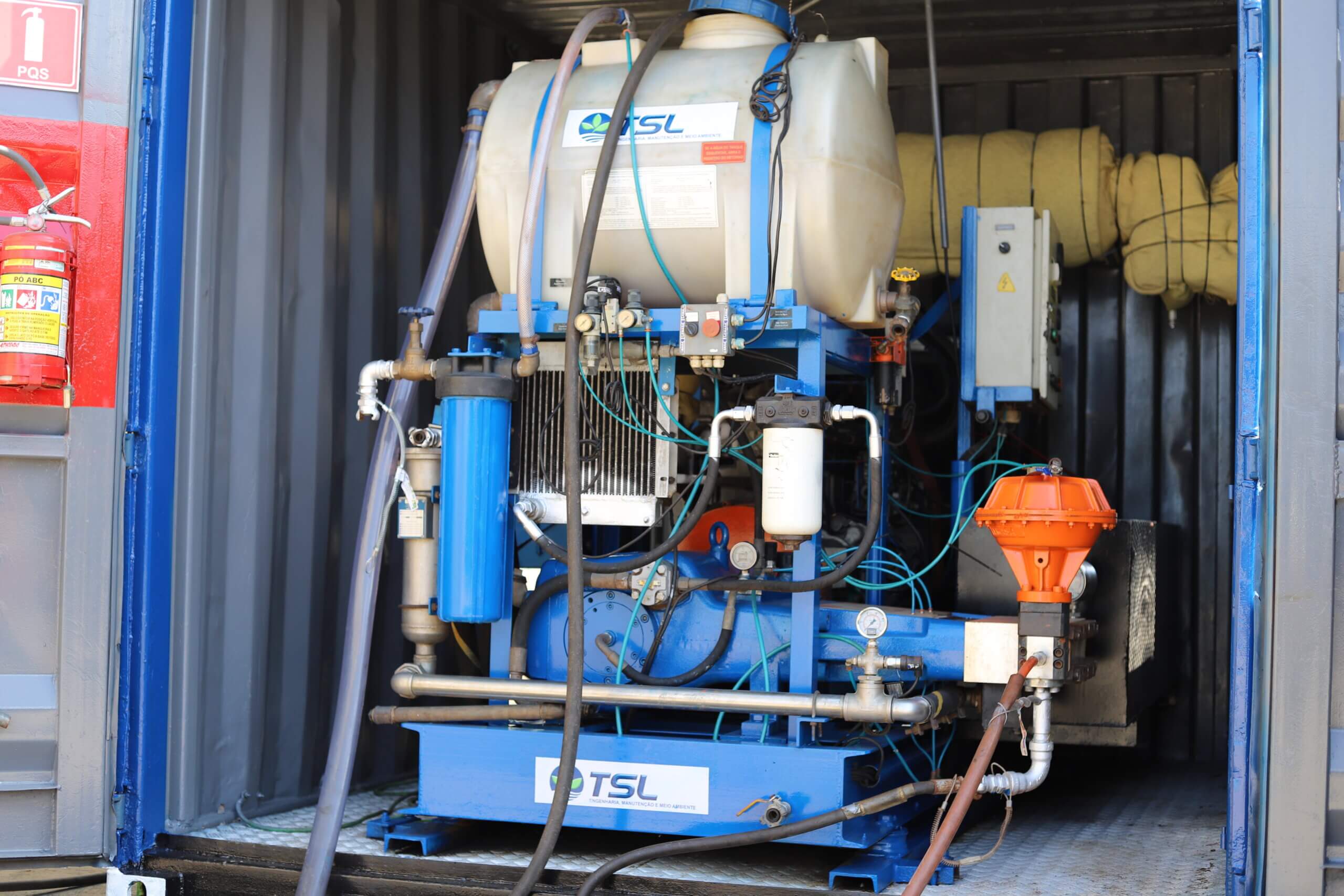
These systems use Special flotation pumps (DGF – Dissolved Gas Flotation pumps) responsible for generating and controlling the size of microbubbles, significantly increasing the efficiency of oil/water separation.

High-efficiency floaters used by TSL

Advantages of flotation systems

The use of dissolved air flotation It offers several operational advantages in the treatment of industrial effluents.

Among the main benefits of this technology are:

Furthermore, modern flotation systems can operate with low recycling rate and reduced energy consumption, increasing the overall efficiency of the treatment process.

Dissolved air flotation applications

You dissolved air flotation They are widely used in various industrial applications, especially in processes involving oily effluents or contaminated liquid streams.

Among the main applications are:

In offshore environments, where Space and weight are critical factors.Compact flotation systems become particularly efficient solutions.

TSL: Specialist in flotation systems and oily water treatment.

THE TSL Engineering, Maintenance and Environment has extensive experience in services related to produced water and industrial wastewater treatment systems, including flotation units used in the oil and gas industry.

The company provides technical support for flotation systems, performing activities such as:

With a specialized technical team and high-performance equipment, TSL contributes to to restore the operational efficiency of flotation systems, ensuring better performance in wastewater treatment and greater reliability of industrial units.

DAF, DGF and CFU: which flotation technology to use

TechnologyHow the bubbles are generatedApplication
DAF (dissolved air flotation)Air is dissolved under pressure in a recycle stream and released as microbubbles when it returns to atmospheric pressure.Industrial wastewater with oils, greases and suspended solids, in onshore plants.
DGF (dissolved gas flotation)Gas is dissolved in the water by special pumps that control microbubble size.Oily water and produced water, including with process gas.
CFU (compact flotation unit)Dissolved gas combined with centrifugal force, with a short residence time.Platforms and FPSOs, where space and weight are critical.

The choice depends on oil droplet size, flow rate, available space and the oil content required at the outlet. For an overview of the three technologies, see flotation systems. For the use of the flotation unit within the treatment plant, see flotation units for wastewater treatment.

Frequently asked questions

How does a dissolved air flotation (DAF) unit work?

Air or gas microbubbles attach to oil droplets and solid particles, reduce the relative density of these contaminants and make them rise to the surface of the unit, where they are removed by collection systems. The treated water is discharged separately.

What oil and grease content can a DAF unit achieve?

In many industrial systems it is possible to achieve a TOG (oil and grease content) below 20 ppm, depending on the characteristics of the effluent and the type of flotation unit used.

What types of dissolved air flotation units are there?

The main types are conventional dissolved air flotation (DAF) units, compact flotation units (CFU), compact vertical flotation units and multi-cell horizontal flotation units.

What is the Cyclosep flotation unit?

It is a compact, single-cell vertical flotation unit that combines centrifugal separation, microbubble flotation and a coalescing medium in one piece of equipment to remove oil and solids from contaminated water.

What is the Veirsep-Plus flotation unit?

It is a multi-cell horizontal flotation unit, with several flotation cells and microbubble generation systems that improve separation at different stages inside the equipment.