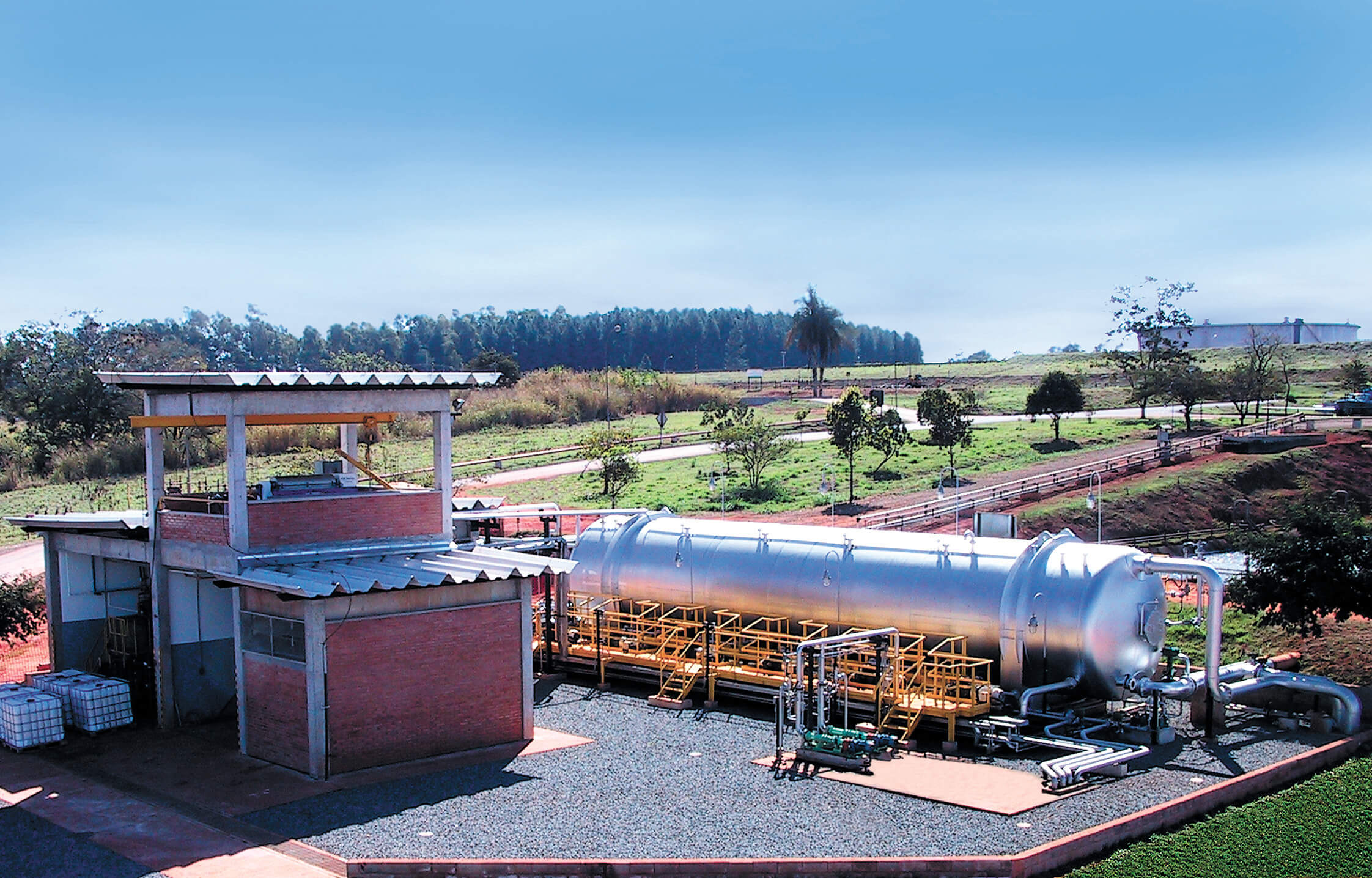
In an industrial wastewater treatment plant, the flotation unit sits after primary separation, which removes free oil and coarse solids, and before the polishing stages or biological treatment. This is where dispersed and emulsified oil and fine solids are removed. A flotation unit with low efficiency overloads every downstream stage.
That is why, when the oil and grease content at the outlet starts to rise, the cause is usually in the flotation unit: accumulated sludge, fouling of the internals, failure in microbubble generation or inadequate chemical dosing.
TSL performs chemical and mechanical cleaning of flotation units, removal of oily sludge and accumulated solids, hydroblasting of the internals and support for maintenance shutdowns, with disposal of the removed waste. The goal is to restore the equipment to its design separation efficiency.
Depending on the stream being treated, see oily wastewater treatment, oily water treatment and produced water treatment. To compare flotation technologies, see dissolved air flotation (DAF) unit.
Oil and grease (TOG), suspended solids, colloidal particles and industrial oily residues.
In separating the contaminants before the final stage of discharge, reuse or reinjection of the treated water.
Oil and gas, petrochemicals, refineries, mining, pulp and paper, the chemical industry and industrial wastewater treatment plants.
Chemical cleaning of flotation units, removal of oily sludge and accumulated solids, internal hydroblasting, maintenance and recovery of operational efficiency, support for maintenance shutdowns and proper disposal of the waste removed.