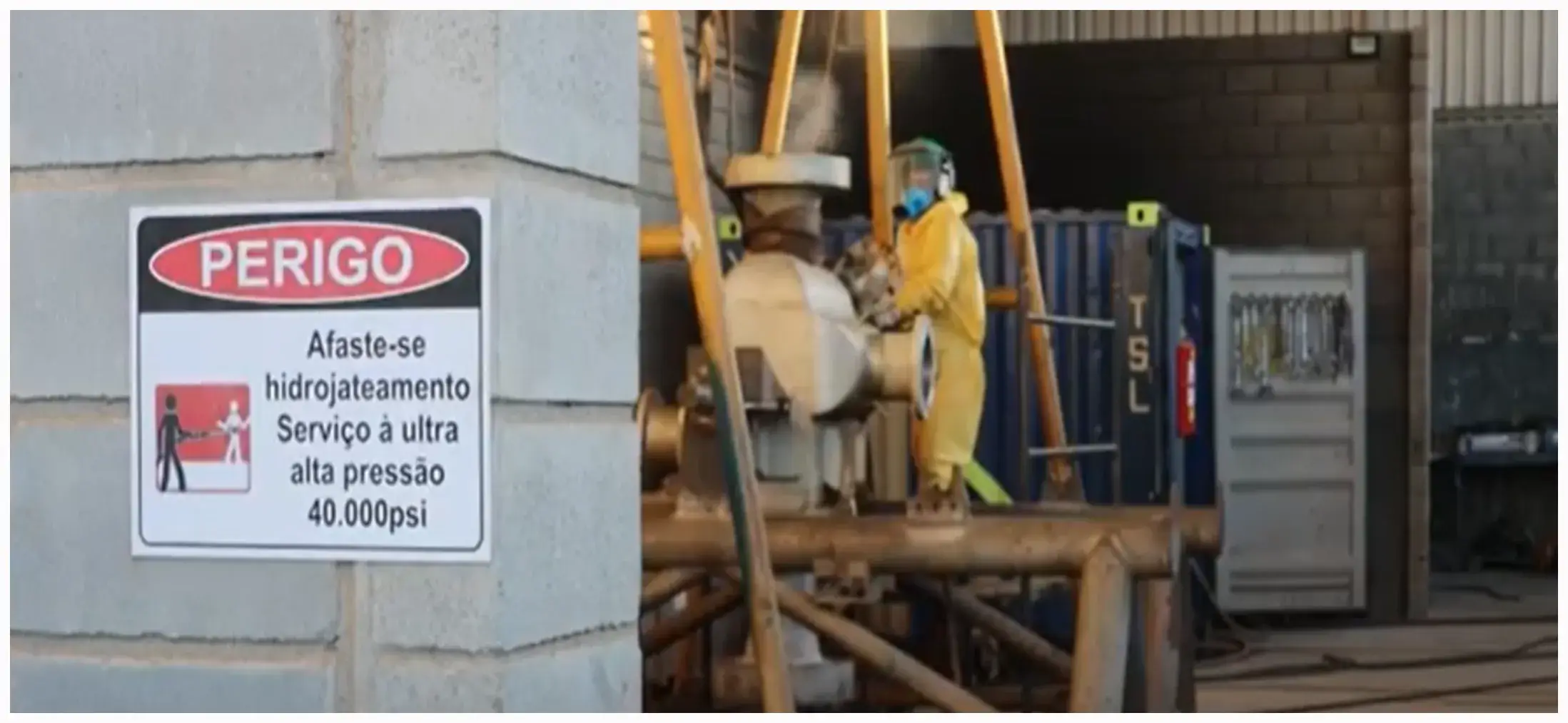
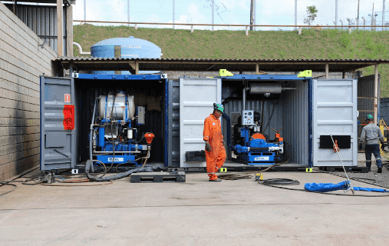
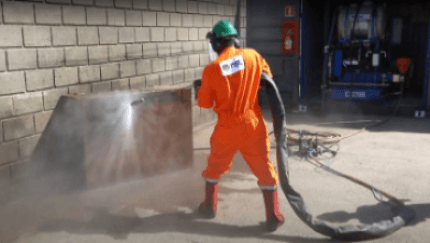
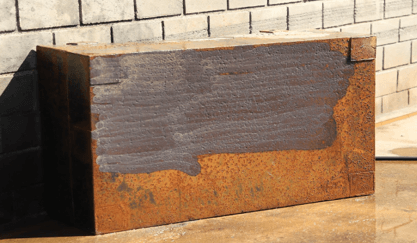
Hydroblasting is an industrial cleaning technique that uses high or ultra-high pressure water jets to remove encrustations, residues, paints, oxides, and other contaminants from industrial surfaces and equipment.
The process uses motor pumps capable of generating pressures between 5,000 and 40,000 psi, which direct jets of water through hoses, guns, and specific nozzles. The force of the water impact removes encrustations without causing mechanical damage to the treated surfaces.
No. Unlike traditional cleaning methods, hydroblasting uses only pressurized water, which makes the process safer and reduces the risk of environmental contamination.
The technique is widely applied in various sectors, such as: Oil and gas, Petrochemicals, Mining, Pulp and paper, Steelmaking, Automotive industry, Power generation, Chemical industry.
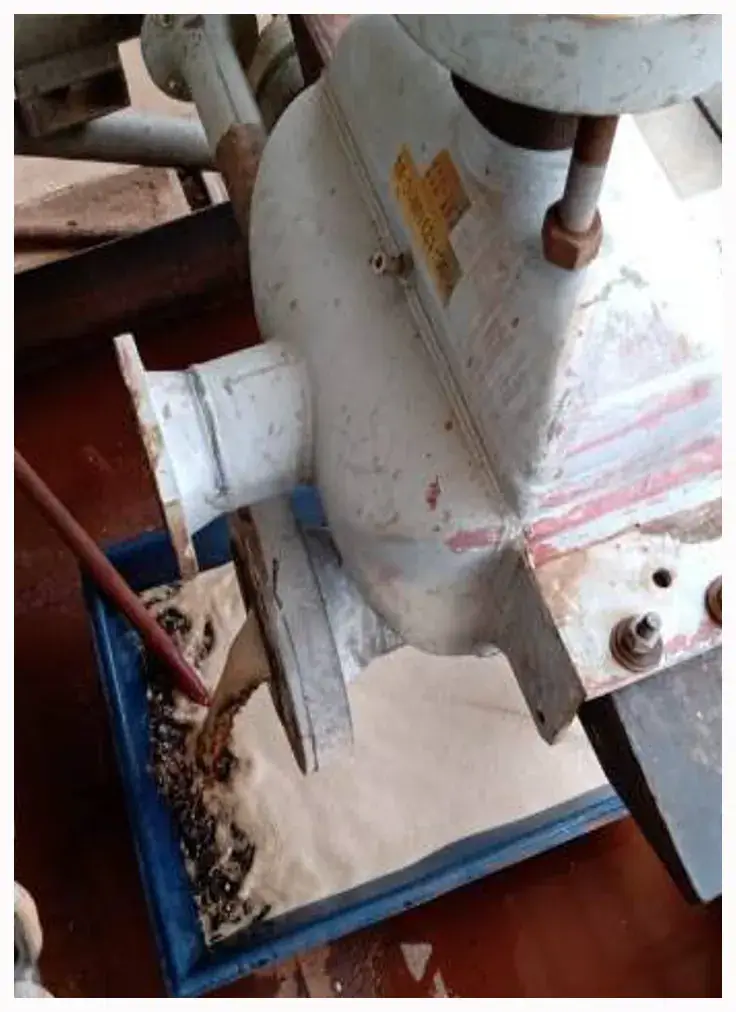
Among the main equipment that can be cleaned using this technique are: Industrial pipelines, Heat exchangers, Boilers, Reactors, Distillation towers, Cooling towers, Industrial tanks.
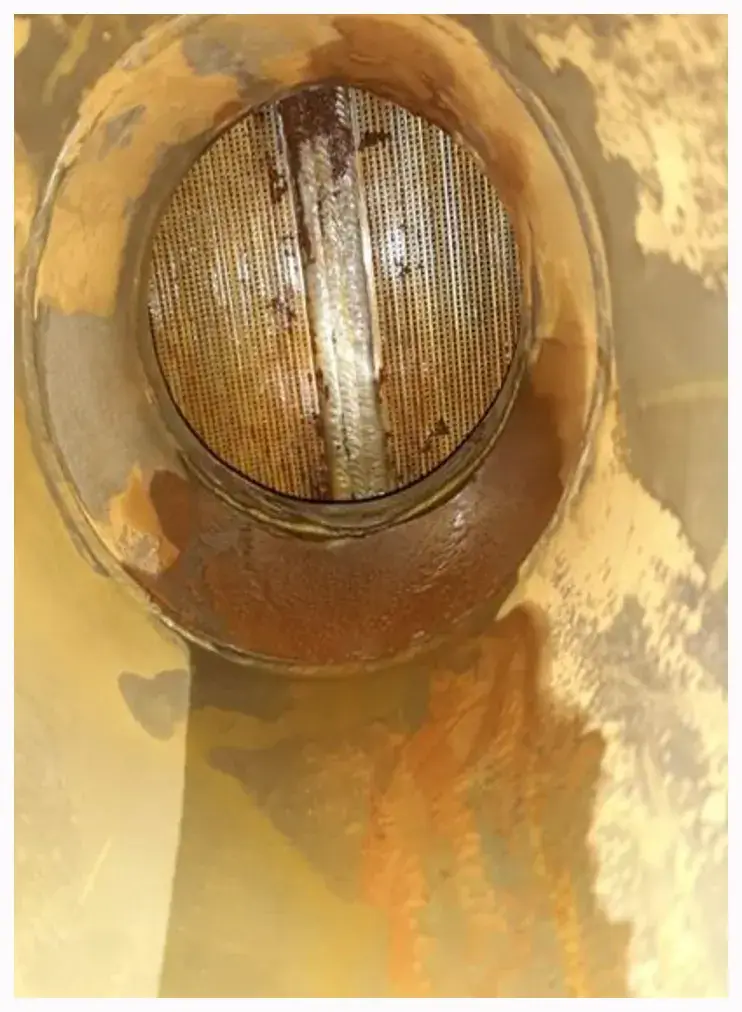
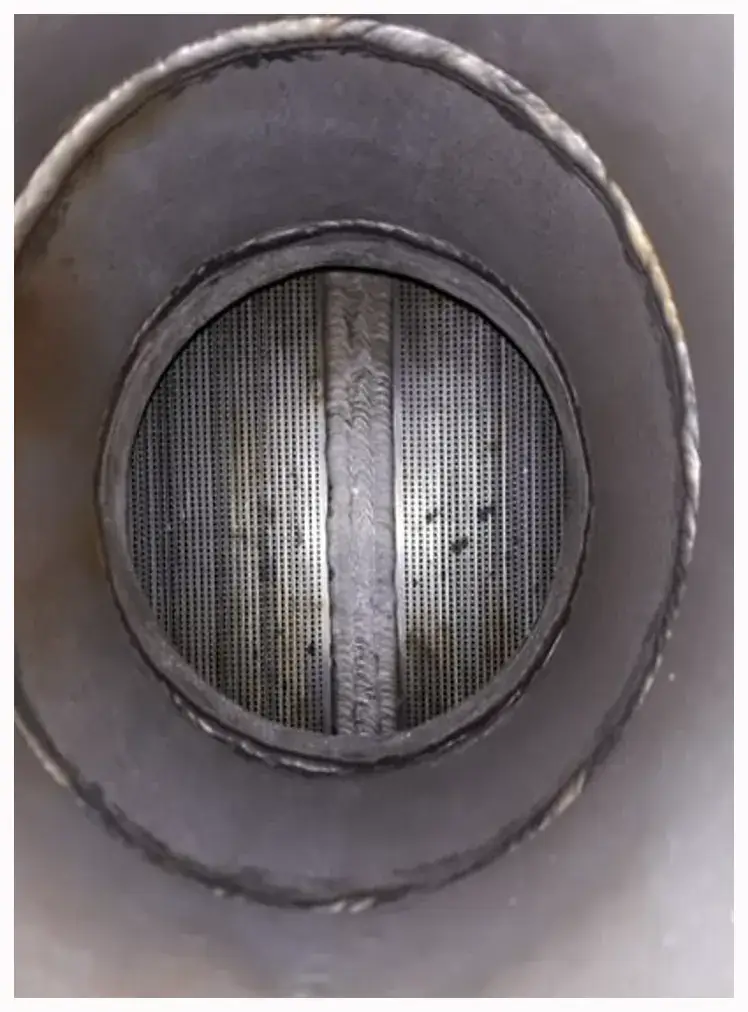
Yes. This is one of the most common applications. The process removes scale buildup on heat exchanger tubes, restoring their thermal efficiency and improving the performance of the industrial system.
Yes. In some operations, automated or robotic systems are used for internal cleaning of equipment such as heat exchangers, pipes, and tanks, increasing the safety and efficiency of the process.
Yes. Ultra-high pressure water jets can be used for cutting pipes, metal structures, concrete, and refractory materials, depending on the application.
Yes. The technique removes deteriorated paint, oxides, and contaminants from the surface, preparing the material to receive new coatings and ensuring better paint adhesion.
High efficiency in contaminant removal. Reduced use of chemicals. Lower environmental impact. Greater operational safety. Adaptability for different surfaces and applications.