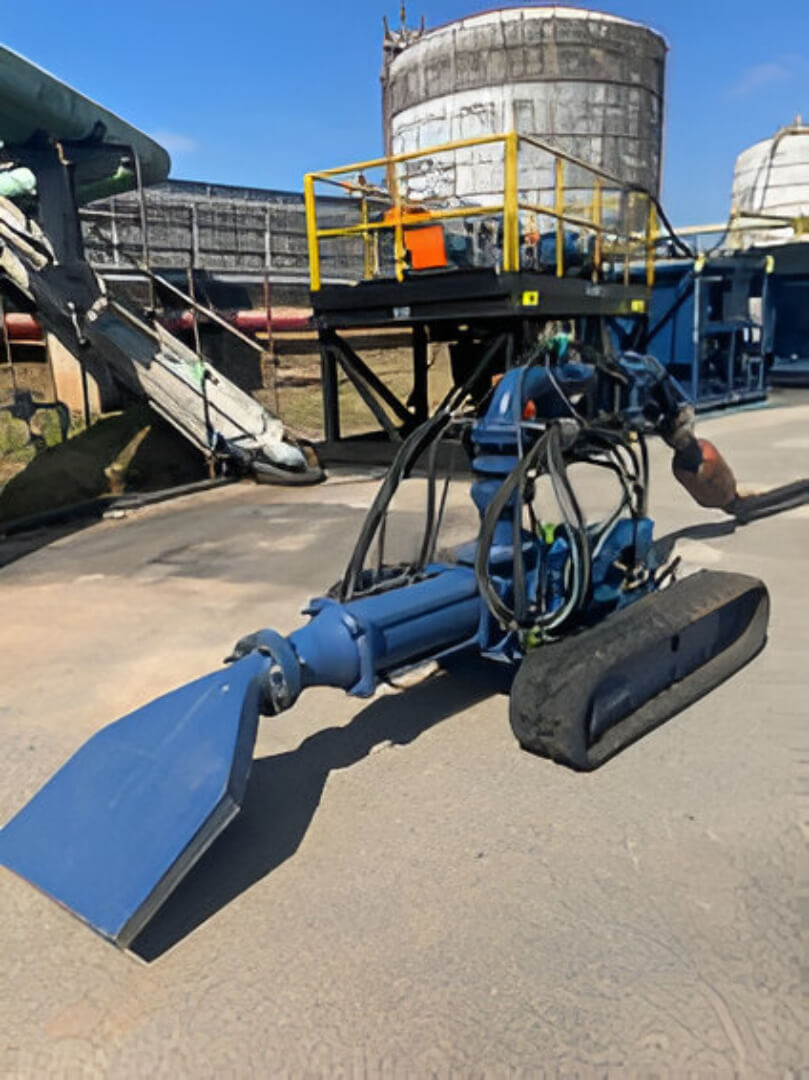
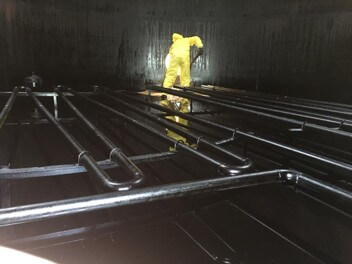

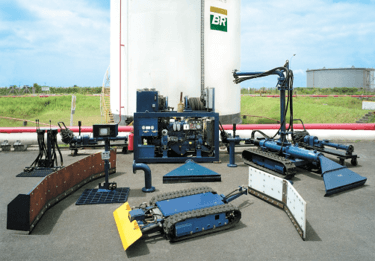
All three methods remove sludge, sediment and scale from the tank, but they differ in how the crew is exposed to the inside of the equipment, in downtime and in how the removed waste is handled. The choice depends on the stored product, the volume and consistency of the sludge, the available access (manholes, fixed or floating roof) and the shutdown window the operation allows. In practice the methods are combined: mechanized and robotic systems do most of the removal, and manual cleaning handles finishing and the spots the equipment cannot reach.
| Criterion | Manual | Mechanized | Robotic |
|---|---|---|---|
| People entering the tank | Continuous during the job | Reduced, concentrated on finishing | Minimal, with remote operation |
| Tank downtime | Longer | Shorter | Shorter |
| Suitable sludge volume | Low | Medium to high | Medium to high |
| Hazardous products or toxic atmosphere | Requires strict exposure controls | Reduced exposure | Best suited |
| Oil recovery from sludge | Limited | Favored by the circulating process | Favored by continuous suction |
Every tank is a confined space under the Brazilian standard NR-33. Each entry requires an entry and work permit, an attendant, atmosphere monitoring, ventilation and a rescue plan. Reducing the number of entries and the time spent inside the tank is the main way to lower risk, and that is the gain of the mechanized and robotic methods. In tanks that stored flammables, NR-20 also applies to job planning.
Sludge from crude oil and petroleum product tanks contains a hydrocarbon fraction that can be separated from water and solids. When removal is done by fluidization and pumping, the material comes out in a condition better suited to separation, which allows part of the oil to be returned to the process and reduces the volume of waste to be disposed of. The solid portion goes on to treatment and disposal with the required documentation.
For the full step-by-step service and the types of tanks served, see industrial tank cleaning.
Manual, mechanized and robotic cleaning. The mechanized and robotic systems complement manual cleaning and are selected according to the tank and the residue.
Because it reduces operator entry into confined spaces, which lowers operational risk, and shortens the time needed to complete the job.
No. Mechanized and robotic solutions complement manual cleaning, reducing the time personnel are exposed inside the tank.