

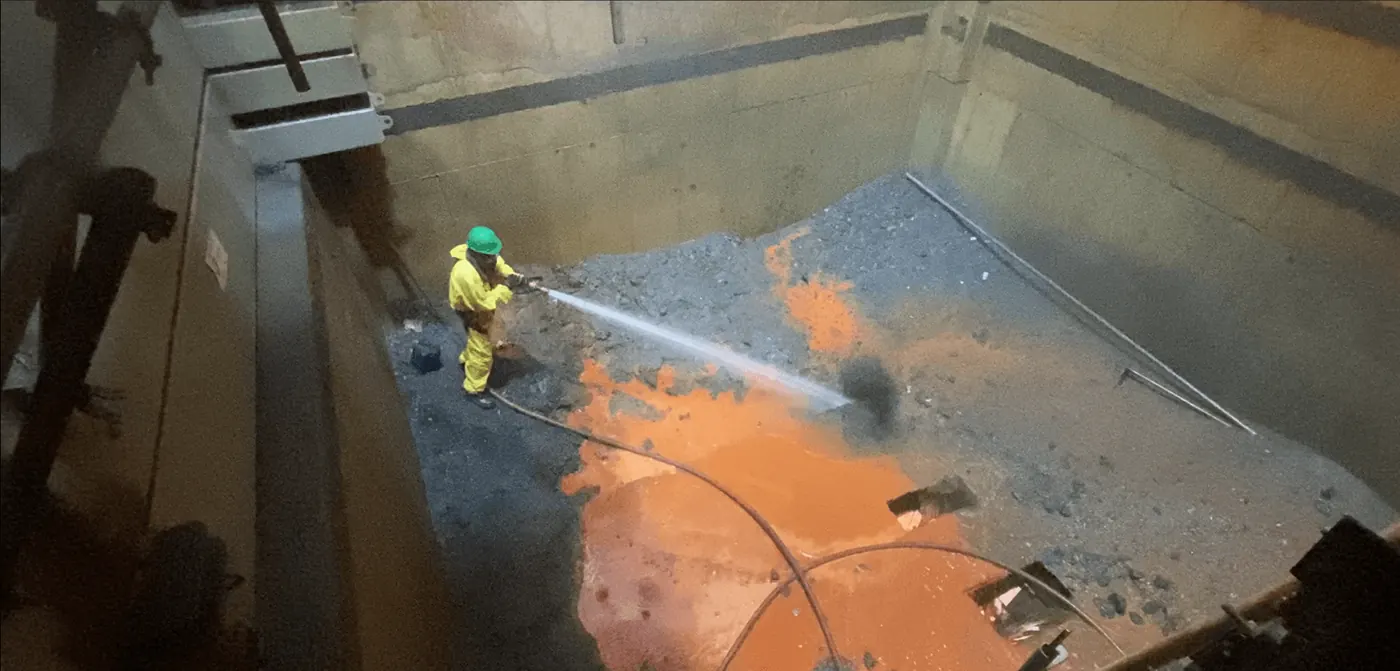
Hiring a tank cleaning company means hiring a high-risk operation. A tank is a confined space, may contain a flammable atmosphere and almost always holds hazardous waste. The choice of supplier determines crew safety, the length of the shutdown and the regulatory compliance of the waste removed.
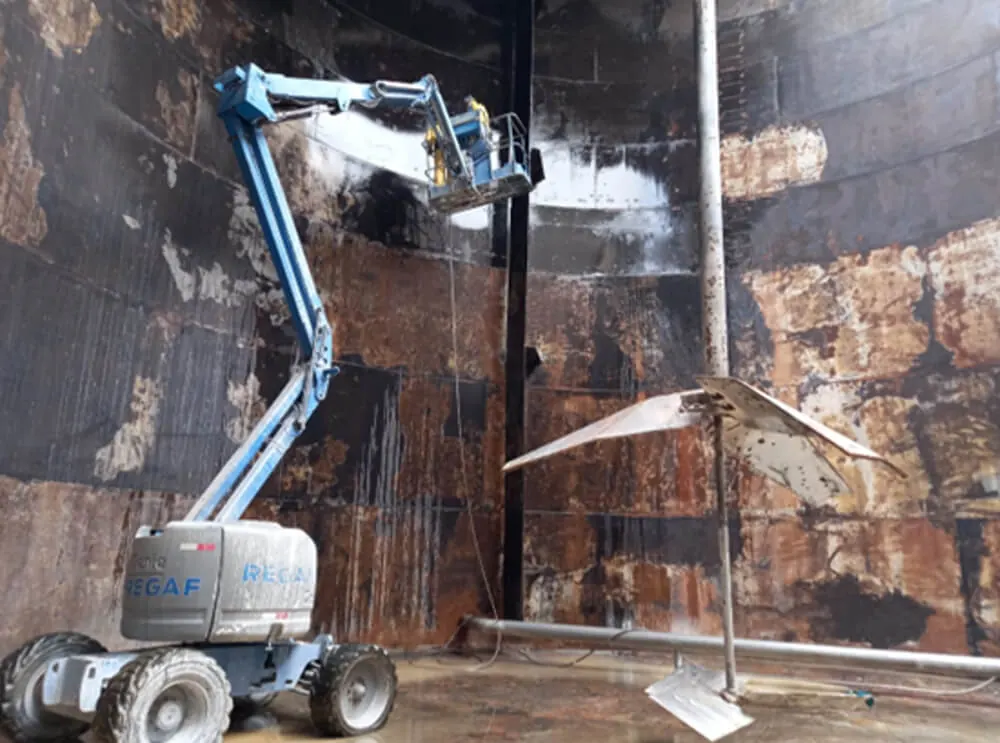
TSL Engineering and Services has been performing tank cleaning for more than 40 years in oil and gas, petrochemical, chemical, mining and energy, with an office in São Paulo and an operational base in Macaé (RJ).
Types of tanks TSL services
How to choose a tank cleaning company
- Certifications: ISO 9001 (quality), ISO 14001 (environmental) and ISO 45001 (occupational health and safety).
- Confined space crew: professionals trained in accordance with NR-33 (Brazilian regulation for confined spaces), with an attendant, entry and work permit, atmosphere monitoring and a rescue team.
- In-house inerting: capability to eliminate flammable vapors before entry or hot work, using boilers and saturated steam.
- Available methods: manual, mechanized and robotic cleaning, and high-pressure hydroblasting. A supplier with only one method adapts the tank to the method, not the other way around.
- Disposal included: collection, licensed transport and disposal of waste with MTR (waste transport manifest) and disposal certificate.
- Safety record: TSL has gone 15 years without lost-time accidents.
- Technical responsibility: engineer registered with CREA (Brazilian regional engineering council), issuing an ART (technical responsibility record) when applicable.
How contracting works
- Technical visit: survey of the tank, the stored product, the sludge volume and the access and safety constraints.
- Work plan: cleaning method, need for inerting, equipment, crew, schedule and waste disposal route.
- Execution: removal of the remaining product, inerting when required, sludge removal and cleaning of internal surfaces.
- Release: tank clean and ready for inspection, maintenance or return to service.
- Disposal and documentation: waste disposed of and documented under waste management.
Manual, mechanized and robotic cleaning
In manual cleaning, trained professionals enter the tank with pneumatic pumps, suction and water jetting equipment. In mechanized cleaning, vacuum suction systems, rotary cleaning devices and transfer pumps reduce crew exposure. In robotic cleaning, remotely controlled equipment eliminates personnel entry, which is recommended for hazardous products and heavy fuels. The choice depends on the product, the volume and the safety conditions of each tank.
Certifications and structure
TSL operations follow a management system certified to ISO 9001, ISO 14001 and ISO 45001, with INMETRO accreditation under ISO 17025. See the details in quality, safety and certifications.
Frequently asked questions
What types of tanks does TSL clean?
Industrial storage tanks, oil and fuel tanks, chemical tanks, offshore tanks on platforms and FPSOs, and ship and vessel tanks.
How often should tanks be cleaned?
Frequency depends on the stored product, sludge buildup and inspection requirements. Oil and fuel tanks have specific cleaning and inspection schedules.
Does tank cleaning include waste disposal?
Yes. TSL performs the cleaning and the environmentally sound disposal of the waste generated, with traceability documentation.
Does TSL clean tanks for decommissioning?
Yes. Tank cleaning and inerting are essential steps in the decommissioning of equipment and platforms.
Which regulations apply to tank cleaning?
Mainly NR-33 (Brazilian regulation for confined spaces) and NR-20 (flammables and combustibles), as well as NR-13 (boilers and pressure vessels) for pressurized equipment. TSL operations follow a management system certified to ISO 9001, ISO 14001 and ISO 45001.