+55 11 2196-2300 tsl@tsleng.com.br São Paulo · Macaé, Brazil

Industrial Hydroblasting

Industrial cleaning with high-pressure water jetting

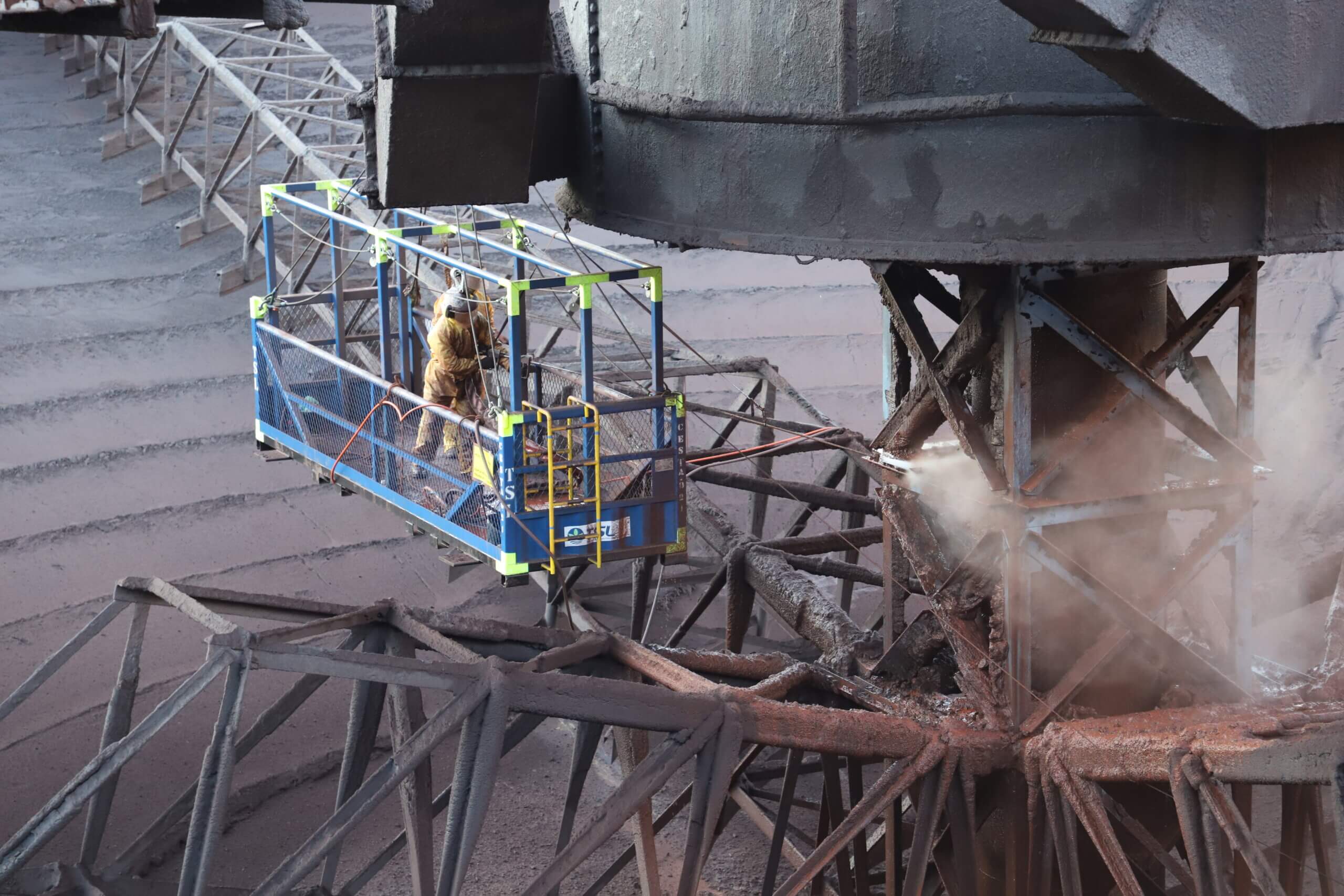
THE industrial hydroblasting It is one of the most efficient and safe techniques used in services of Industrial cleaning, equipment descaling, and industrial surface preparation.This process uses jets of water in high or ultra-high pressure, capable of removing encrustations, residues, paints, oxides and various contaminants present in industrial equipment and structures.

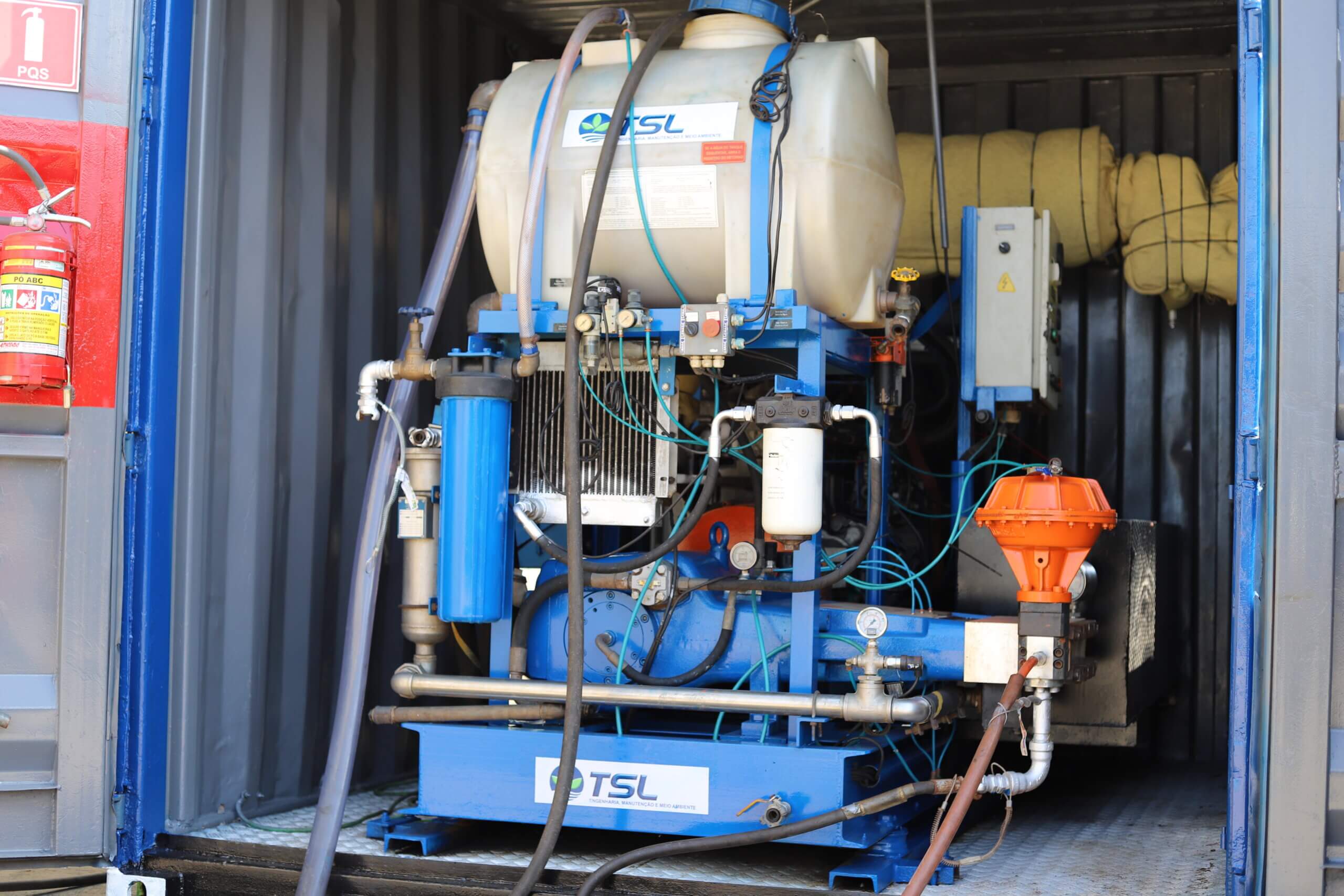
The technique of Industrial cleaning with high-pressure water jetting. It uses high-performance motor pump sets that operate at different flow rates and working pressures, and can typically reach... pressures between 5,000 and 40,000 psidepending on the application and the type of surface to be treated.

The systems of high-pressure water jetting They consist of industrial pumps, safety hoses, guns, and specific nozzles that precisely direct the water jet to the cleaning area. The energy generated by the impact of the water jet allows for the removal of encrustations and adhered deposits without causing structural damage to the treated surfaces.

Unlike traditional industrial cleaning methods that use chemicals or abrasives, the Industrial hydroblasting relies solely on the force of pressurized water.This makes the process safer, more efficient, and environmentally sustainable. This feature reduces the risk of environmental contamination and eliminates the need to use harsh chemical agents.

Industrial cleaning with high-pressure water jetting

Applications of industrial hydroblasting

THE high and ultra-high pressure water jetting It is widely used in various industrial sectors, such as Oil and gas, petrochemicals, mining, steelmaking, pulp and paper, power generation, chemical industry, and automotive industry..

In these sectors, regular equipment maintenance is essential to ensure the continuity of production processes, increase operational efficiency, and reduce unscheduled downtime.

Among the main applications of industrial hydroblasting they are:

These applications allow for the removal of mineral deposits, scale, chemical residues, oils, and contaminants that accumulate during the operation of industrial equipment.

Cleaning heat exchangers using hydroblasting.

One of the most important applications of industrial hydroblasting It's the cleaning of heat exchangers, essential equipment in industrial plants responsible for heat transfer between fluids.

Heat exchangers of the type hull and tubes They have a large number of small-diameter tubes, where scale and deposits frequently accumulate during operation. This scale reduces the thermal efficiency of the equipment and can compromise the performance of the industrial process.

THE Cleaning heat exchangers using high-pressure water jetting. It allows for the removal of these encrustations with great efficiency, restoring the operational capacity of the equipment and increasing the efficiency of the system.

Typically, heat exchangers are disassembled and sent to specific cleaning areas, where techniques are applied to... high or ultra-high pressure water jettingDue to the complexity of this activity, it is essential that the service be performed by companies specializing in industrial hydroblasting.

Cleaning heat exchangers using hydroblasting.

Surface preparation using hydroblasting.

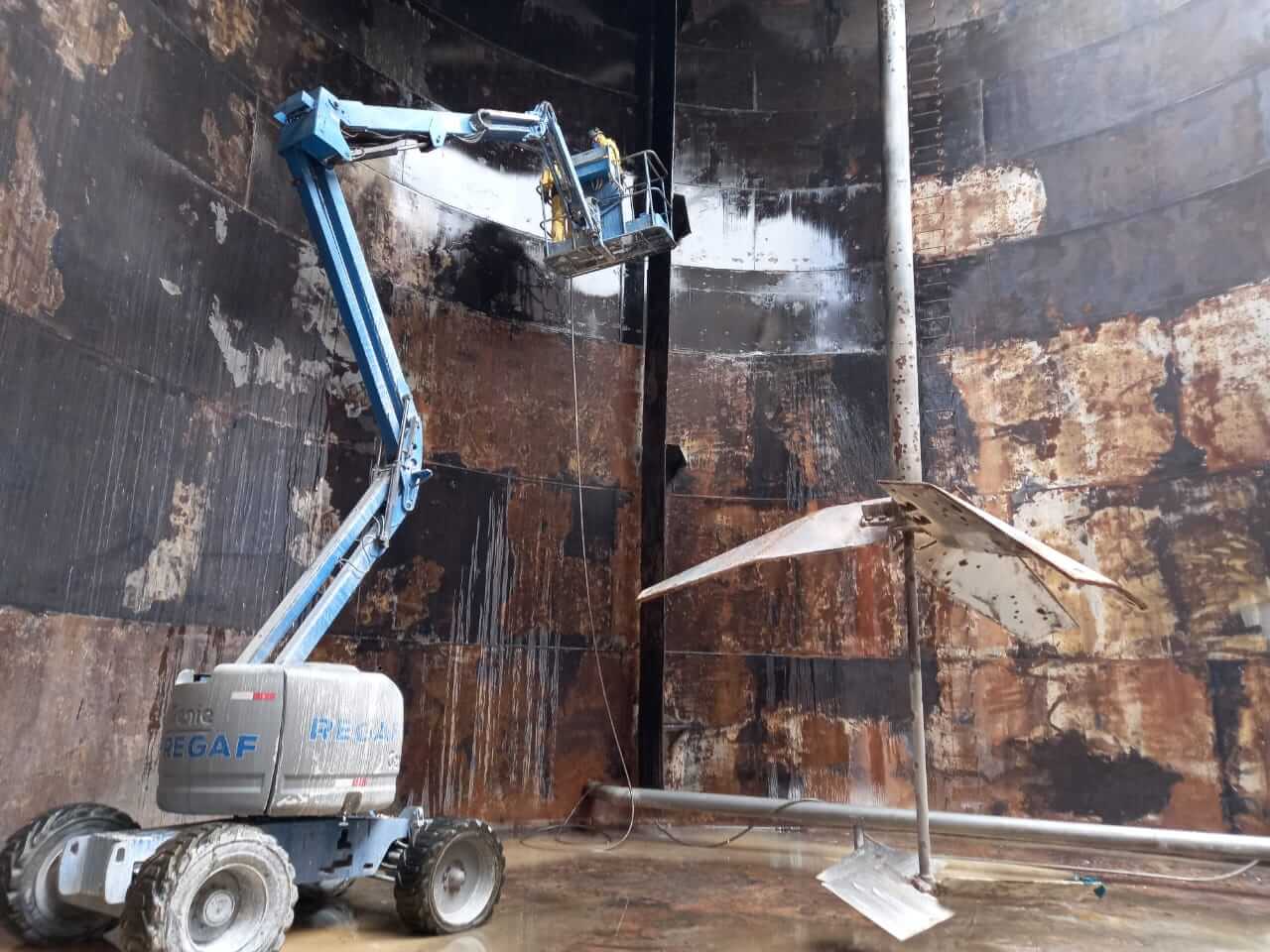
Another important application of industrial hydroblasting it is Surface preparation for industrial painting and coatings..

Equipment exposed to weather, chemical reactions, and industrial processes tends to suffer corrosion and the accumulation of contaminants over time. Before applying new paint systems, proper surface cleaning is necessary to ensure the adhesion and durability of the coatings.

THE ultra-high pressure water jetting It allows the removal of deteriorated paint layers, oxides, and contaminants present on metal surfaces, preparing the equipment for the application of new anti-corrosion protection systems.

Depending on the surface conditions and the degree of coating deterioration, different working pressures and specific devices can be used to achieve the desired level of cleanliness.

The services of surface preparation using hydroblasting They can achieve levels of cleanliness equivalent to the standards. SA 2½ and SA 3, ensuring excellent adhesion for industrial painting systems.

One of the great advantages of hydroblasting compared to traditional methods, such as abrasive blasting, is that... reduction in the generation of solid waste and suspended particles, contributing to reducing environmental impacts and waste disposal costs.

Advantages of industrial hydroblasting

THE industrial hydroblasting It offers several advantages when compared to other methods of technical cleaning and equipment maintenance.

Among the main benefits are:

Furthermore, the process can be adapted to different operational needs through the appropriate selection of working pressure, water flow rate, and application devices.

Safety in hydroblasting operations

Due to the high energy involved in the process, the activities of high and ultra-high pressure water jetting They must be performed by properly trained and qualified professionals.

The use of appropriate equipment, safe operating procedures, and specialized teams is fundamental to ensuring the integrity of workers and the safety of industrial facilities.

Safety in hydroblasting operations

TSL: Specialist in industrial hydroblasting

THE TSL Engineering, Maintenance and Environment has extensive experience in performing Industrial hydroblasting and technical cleaning services using hydroblasting., operating for over four decades in various industry segments.

The company has a large fleet of high-performance equipment capable of operating with pressures up to 40,000 psiIn addition to a wide variety of devices specifically designed for different industrial applications.

With highly qualified and trained teams to operate in complex industrial environments, TSL performs services of Industrial hydroblasting services in refineries, offshore platforms, petrochemical plants, chemical and steel industries, and industrial units throughout Brazil..

With tradition, technology and a commitment to safety, the TSL Engineering It has established itself as one of the most experienced companies in the market in Industrial hydroblasting, cleaning of process equipment and preparation of industrial surfaces..

Get in touch with TSL Engineering, Maintenance and Environment and discover specialized solutions in High-pressure water jetting, ultra-high-pressure water jetting, and industrial cleaning with water jets..

What hydroblasting is (water jetting)

Hydroblasting is cleaning with a high or ultra high pressure water jet. The impact energy of the water removes scale, sludge, paint, oxides and adhered deposits, with no chemicals and no abrasives. A water jetting unit is the equipment that performs it, and in everyday use the term also refers to the service itself.

An industrial water jetting unit is not a pressure washer. Ordinary pressure washers work at much lower pressures and are meant for surface cleaning. Industrial hydroblasting uses motor pump units, safety hoses, lances, flexible lances and specific nozzles, operates in the range of thousands of psi and requires trained crews, procedures and safety standards such as the Brazilian standard NBR 14533.

Hydroblasting pressure ranges

Pressure is chosen according to the deposit: the right pressure is the lowest one that does the job. For routine work, super high pressure (SAP, from 10,000 to 20,000 psi, approximately 690 to 1,380 bar) covers heat exchangers, piping and tanks. The SUP range (20,000 to 30,000 psi, approximately 1,380 to 2,070 bar) is used for heavy cleaning, coke and reactors. Ultra high pressure (UAP, from 30,000 to 40,000 psi, approximately 2,070 to 2,760 bar) removes coatings and prepares surfaces. See the full table at 40,000 psi (2,760 bar) water jetting and the technical explanation at UAP hydroblasting.

Hydroblasting services

How to choose among industrial hydroblasting companies

Before hiring, compare industrial hydroblasting companies on four points:

  • Available pressure range: does the job call for high pressure, SUP or ultra high pressure? TSL operates from 10,000 to 40,000 psi (approximately 690 to 2,760 bar).
  • Certified management system: TSL is certified to ISO 9001, ISO 14001 and ISO 45001.
  • Waste destination: the removed sludge requires collection and documented disposal; TSL also provides industrial waste management.
  • Experience with the type of facility: TSL has 40 years of experience in refineries, industrial plants and offshore units.

Where TSL operates

TSL serves clients from its office in São Paulo and its operational base in Macaé (RJ), in refineries, petrochemical and chemical plants, steelmaking, mining and offshore units. See also industrial cleaning in RJ, industrial cleaning in Macaé and industrial maintenance in SP.

Frequently asked questions

What is the pressure range for industrial hydroblasting?

Typically between 5,000 PSI (about 345 bar) and 40,000 PSI (about 2,760 bar), defined according to the application and the type of surface.

In which sectors is industrial hydroblasting used?

Oil and gas, petrochemicals, mining, steel, pulp and paper, power generation, the chemical industry and the automotive industry, on piping, boilers, vessels, towers, tanks, heat exchangers and steel structures.

Does industrial hydroblasting use chemicals?

No. The process relies solely on the force of pressurized water, which reduces the risk of environmental contamination and eliminates the need for aggressive chemical agents.

What level of cleanliness does hydroblasting achieve in surface preparation?

Levels equivalent to the SA 2½ and SA 3 standards, which ensure good adhesion for industrial coating systems.

What is the advantage of hydroblasting over abrasive blasting?

It generates far less solid waste and airborne particles, which reduces environmental impact and disposal costs.