

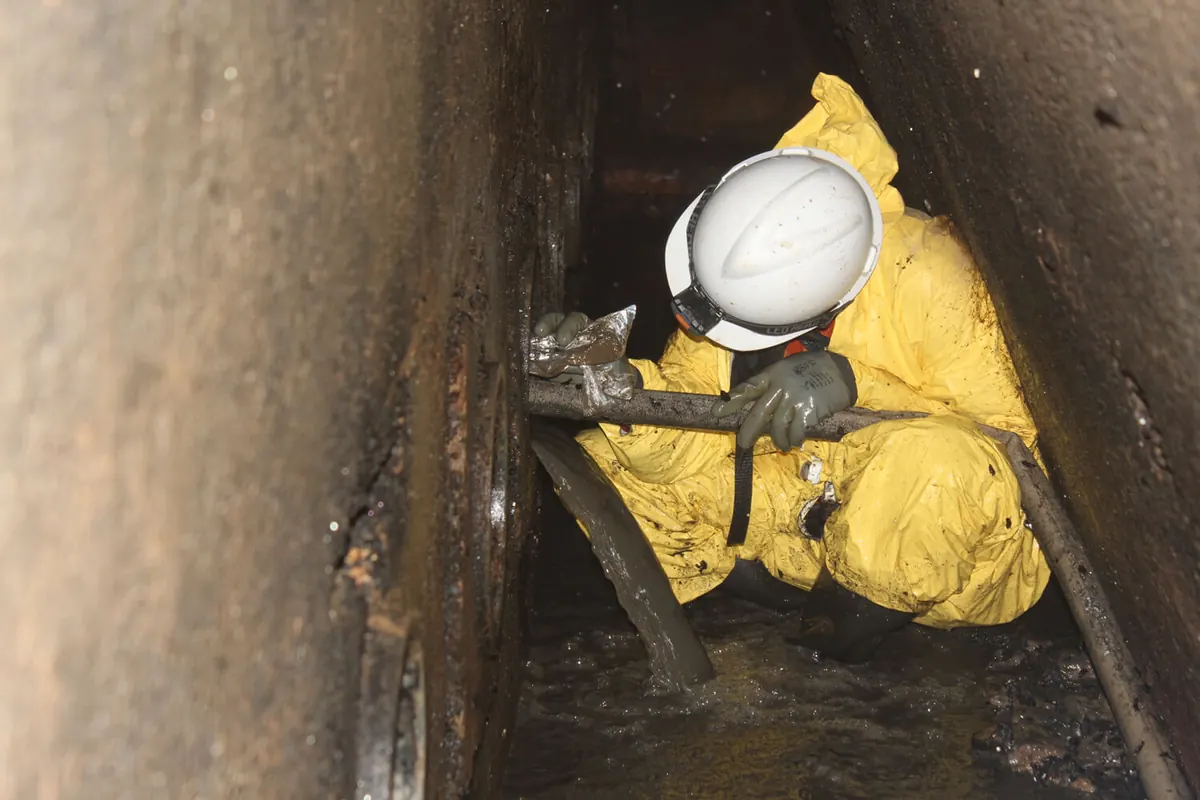
Why a fuel tank needs cleaning
In diesel tanks, the most common problem is water accumulating at the bottom, coming from condensation and from refueling itself. Water promotes the formation of sludge, which contaminates the fuel, clogs filters and accelerates internal corrosion of the tank.
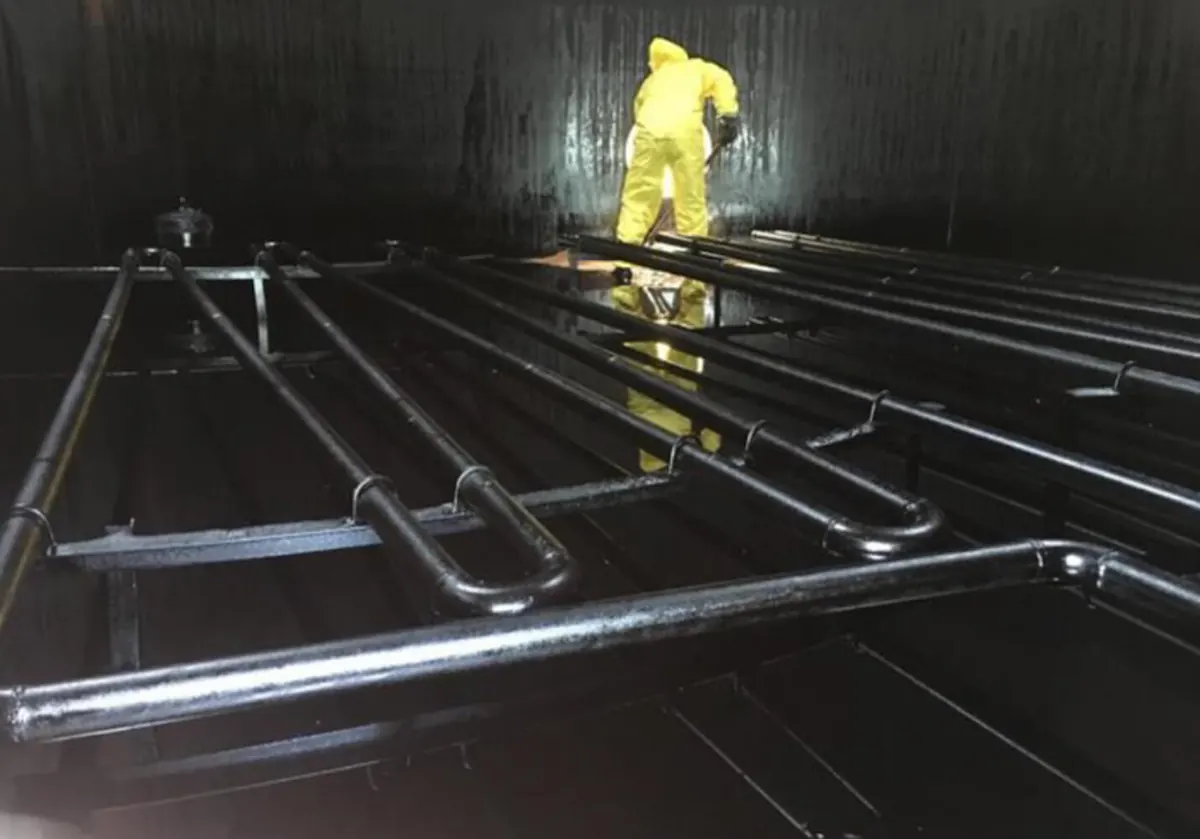
In fuel supply tanks for generators and fleets, periodic cleaning preserves fuel quality and the reliability of the equipment that depends on it. An emergency generator that receives contaminated diesel may fail precisely when it is called upon.
Signs that it is time to clean
- Fuel filters clogging before their scheduled replacement.
- Water detected at the bottom of the tank or in the drain.
- Sludge or dark sediment in the bottom sample.
- Starting failures or loss of performance in engines and generators supplied by the tank.
- Scheduled inspection, product change or tank maintenance.
Fuel tanks we service
| Tank type | What typically accumulates |
|---|---|
| Diesel storage at industrial plants and depots | Condensation water, sludge and bottom deposits |
| Fuel supply for generators and fleets | Water, sediment and degraded fuel |
| Fuel oil and heavy fuel oil (BPF) | Heavy sludge, which requires heating or dilution before removal |
Tanks for other petroleum products and lubricating oil are covered in oil tank cleaning.
How fuel tank cleaning is performed
- Technical assessment: volume, access, stored product and amount of sludge define the method and equipment.
- Emptying: the remaining fuel is recovered, and usable fuel can be separated from contaminated fuel.
- Water and sludge removal: bottom material is extracted with a vacuum truck or removed manually, mechanically or robotically, depending on the tank.
- Internal washing: surfaces are washed and, where there is scale, treated with hydroblasting.
- Disposal: oily waste is sent for disposal with traceability documentation, under TSL's waste management.
When the tank is going to undergo hot work or remain open for maintenance, its internal atmosphere can be made safe through inerting.
Safety: NR-33 and NR-20
The interior of a fuel tank is a confined space with a potentially flammable atmosphere. Entry follows the procedures of NR-33 (Brazilian regulation for confined spaces), with atmosphere testing, ventilation and an entry permit. The handling of flammables follows NR-20 (flammables and combustibles). Mechanized or robotic cleaning reduces the time workers spend inside the tank, as explained in manual, mechanized and robotic tank cleaning.
TSL operations follow a management system certified to ISO 9001, ISO 14001 and ISO 45001, and the company has 40 years of experience in industrial cleaning.
What determines the cost of cleaning
The price of a fuel tank cleaning depends on:
- Tank volume and geometry.
- Amount and consistency of the accumulated sludge.
- Access to the interior and the need for confined space entry.
- Required equipment, such as a vacuum truck and water jetting unit.
- Volume of waste to be transported and disposed of.
That is why the quote starts with a technical assessment of the tank. Contact TSL to schedule one.
Frequently asked questions
Why clean a fuel tank?
Because water from condensation and from refueling accumulates at the bottom of the tank and promotes the formation of sludge. This material contaminates the fuel, clogs filters and accelerates internal corrosion. Cleaning removes free water, sludge and degraded fuel.
Which fuel tanks does TSL clean?
Diesel storage tanks at industrial plants and depots, fuel supply tanks for generators and fleets, and fuel oil and heavy fuel oil (BPF) tanks.
How is a diesel tank cleaned?
The tank is emptied and the remaining fuel is recovered. Next, free water and bottom sludge are removed, the internal surfaces are washed and the oily waste is sent for disposal with documentation.
What determines the cost of cleaning a fuel tank?
The volume and geometry of the tank, the amount of accumulated sludge, access to the interior (whether confined space entry is required), the need for equipment such as a vacuum truck and the volume of waste to be disposed of. That is why the quote starts with a technical assessment of the tank.
Does entering a fuel tank require special precautions?
Yes. The interior of a fuel tank is a confined space with a potentially flammable atmosphere. Entry follows the procedures of NR-33 (Brazilian regulation for confined spaces), with atmosphere testing and an entry permit, and the handling of flammables follows NR-20 (flammables and combustibles).