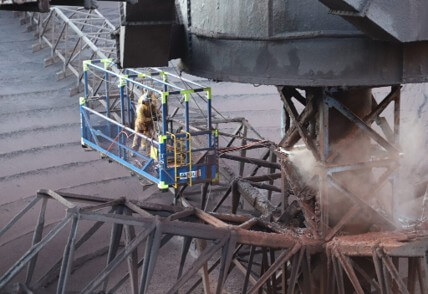
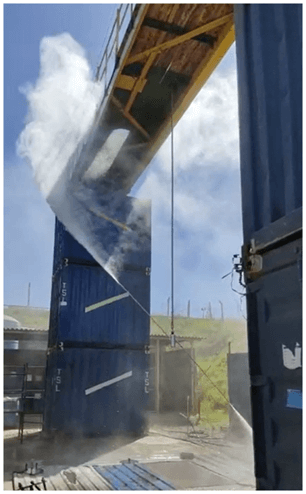
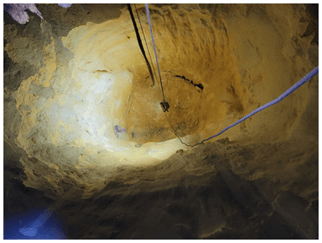
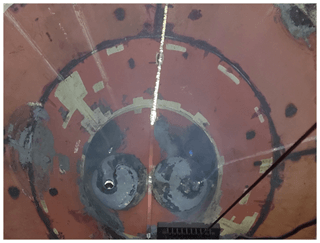
A custom solution is needed when the standard method does not work: the waste is unusual, the equipment has complex geometry, access is restricted or the plant cannot stop for the time conventional cleaning would require. Development follows defined stages, so that the solution is validated before it reaches the client's equipment.
The starting point is understanding what needs to be removed and from where. For the equipment, the survey covers dimensions, material of construction, available nozzles and openings, internal obstructions and the pressure and temperature limits of the surfaces. For the waste, the assessment covers hardness, adhesion, layer thickness, composition and associated hazards, such as flammability, toxicity or dust generation. These data define what the method must overcome without damaging the equipment.
With the diagnosis in hand, the cleaning principle is chosen: hydroblasting at different pressure and flow ranges, vacuum suction, steam, mechanical action or a combination of them. Next, the tooling is defined: nozzles, lances, rotating heads, extensions and supports adapted to the geometry. The means of access is also part of the design, using existing openings, external positioning of the equipment or guided devices that avoid people entering.
Before execution, the solution is tested under controlled conditions, on a sample of the waste, on a section of the equipment or on a reduced work front. The test confirms whether the method removes the material, whether the surfaces remain intact and whether the execution time fits the available window. Adjustments to tooling and parameters are made at this stage, not during the shutdown.
Execution follows a written procedure, with risk analysis, work permits and the controls required by the applicable standards, such as the Brazilian NR-33 for confined spaces and NR-35 for work at height. Energy isolation, atmosphere monitoring and exclusion zones for hydroblasting are part of the planning. The removed waste is collected and disposed of with the corresponding documentation.
Equipment where this kind of development is often needed:
They are engineering projects tailored to specific cleaning challenges that standard methods cannot solve, taking into account the type of residue, the equipment and the plant conditions.
When the cleaning challenge involves complex geometry, unusual residue, access restrictions or safety requirements that call for a specific engineering approach.
TSL's engineering team carries out a technical assessment of the challenge and designs the appropriate solution, integrating cleaning technologies, equipment and procedures specific to each case.
For sectors such as mining, petrochemicals, steel, oil and gas and energy, where industrial cleaning challenges require specialized engineering.