+55 11 2196-2300 tsl@tsleng.com.br São Paulo · Macaé, Brazil

Geobags and Sludge Thickening Systems

Geobag Systems

TSL operates in the complete implementation of sludge thickening systems with geobags, integrating dredging, sediment pumping, chemical sludge preparation, and dewatering system operation services. This integrated approach ensures greater operational efficiency and better environmental control throughout the entire process.

TSL has extensive experience in executing environmental dredging projects associated with dewatering systems using geobags. Our services range from operational planning, sizing of the thickening system and preparation of the installation area to the execution of dredging, sludge pumping, polymer control and complete operation of the dewatering process.

Geobag Systems

Geobags and Sludge Thickening Systems

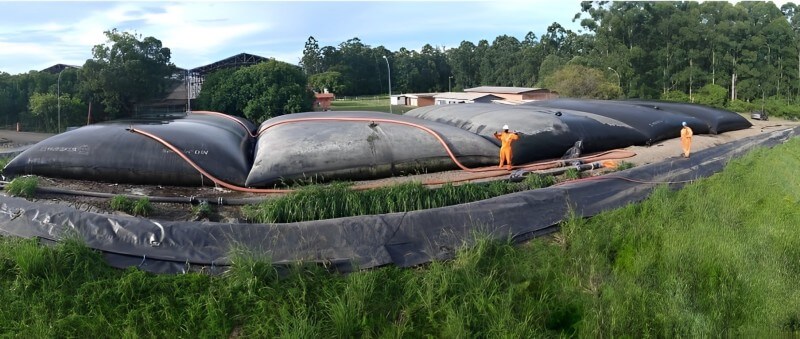
Sludge dewatering and thickening systems using geobags are one of the most efficient and sustainable solutions for sediment treatment, environmental dredging, and industrial liquid waste management. This technology utilizes bags made of high-strength geotextile, designed to perform solid-liquid separation, allowing water to drain while solids are retained and consolidate inside the structure.

Known internationally as geotubes or geobagsThese systems are widely used in dredging projects, sludge treatment, and sediment dewatering from treatment plants, industrial lagoons, containment basins, and reservoirs. The technology allows for a significant reduction in the volume of waste, facilitating the handling, transport, and final disposal of the solid material.

TSL operates in the complete implementation of sludge thickening systems with geobags, integrating dredging, sediment pumping, chemical sludge preparation, and dewatering system operation services. This integrated approach ensures greater operational efficiency and better environmental control throughout the entire process.

The system's operating principle is based on solid-liquid separation. Initially, the dredged sludge or sediment is pumped into geobags installed in areas prepared with drainage systems. During the filling process, flocculating polymers are added, which promote the agglomeration of solid particles and facilitate their retention within the geotextile.

As the material is pumped into the geotextile bags, the water present in the sludge passes through the permeable fabric and returns to the environment or treatment system, while the solids remain trapped. Over time, the natural process of drainage and compaction occurs, significantly reducing the moisture content of the material and consolidating the sediment inside the structure.

This process can result in volumetric reductions greater than 80%Depending on the characteristics of the treated sludge, the consolidated material can then be removed in a much simpler and safer way, reducing logistical costs and environmental impacts.

Geobag systems are particularly efficient in operations of dredging and desiltingThis technology is particularly useful in areas where large volumes of sediment need to be managed with appropriate environmental control. In projects involving the cleaning of lagoons, reservoirs, canals, industrial tanks, and containment basins, it allows for the continuous removal and treatment of sediment, avoiding the need for large drying areas or complex treatment structures.

Why choose TSL for Geobags services?

TSL has extensive experience in executing environmental dredging projects associated with dewatering systems using geobags. Our services range from operational planning, sizing of the thickening system and preparation of the installation area to the execution of dredging, sludge pumping, polymer control and complete operation of the dewatering process.

This integrated approach allows for optimizing system performance, reducing operational costs, and ensuring compliance with environmental requirements applicable to sediment management and waste treatment projects.

In addition to dredging applications, geobag systems are also widely used in the treatment of sludge from... Water treatment plants (WTPs), wastewater treatment plants (WWTPs), chemical and petrochemical industries, mining, and various industrial processes.In these cases, the goal is to promote the efficient dewatering of the sludge generated in the treatment process, reducing the final volume of waste to be disposed of.

Among the main advantages of using geobags for sludge dewatering and sediment thickening are high efficiency in solid-liquid separation, significant reduction in waste volume, low energy consumption, and operational simplicity. Compared to mechanical dewatering technologies, such as filter presses or centrifuges, the system offers less operational complexity and greater flexibility for temporary or large-scale operations.

Another important benefit is the environmentally sustainable nature of the technology. The water drained during the process can be reused or directed to treatment systems, reducing water consumption and minimizing environmental impacts associated with the operation.

With over four decades of experience in industrial and environmental services, TSL offers complete solutions for dredging, sludge dewatering, and sediment thickening projects using geobags. Our specialized technical team and operational structure allow us to handle projects of varying sizes, from one-off interventions to large-scale environmental remediation and industrial reservoir maintenance operations.

Frequently Asked Questions about Geobags

What are geobags?

Geobags are bags made of high-strength geotextile used to separate solids and liquids in dredging, sludge dewatering, and sediment treatment processes.

What are geobags used for?

Geobags are used to reduce the volume of sludge and sediment from treatment plants, industrial lagoons, reservoirs, and dredging operations.

How does the geobag system work?

The sludge or sediment is pumped into the geotextile bag. The water passes through the permeable fabric and returns to the treatment system, while the solids remain trapped and consolidate within the structure.

What are the advantages of using geobags?

Among the main advantages are high efficiency in solid-liquid separation, significant reduction in waste volume, low energy consumption, and operational simplicity.

In what applications are geobags used?

Geobags are used in dredging projects, wastewater treatment plant and water treatment plant sludge treatment, industrial lagoon cleaning, mining, and environmental sediment management.

Geotextile tubes for sludge dewatering

A geobag, also called a geotextile tube, geotextile bag or geotube, is a high-strength bag made of permeable synthetic fabric. Sludge is pumped into the bag; the fabric retains the solids and lets the water through. It is a gravity dewatering solution with no continuous energy consumption, suited to large volumes of material with high water content.
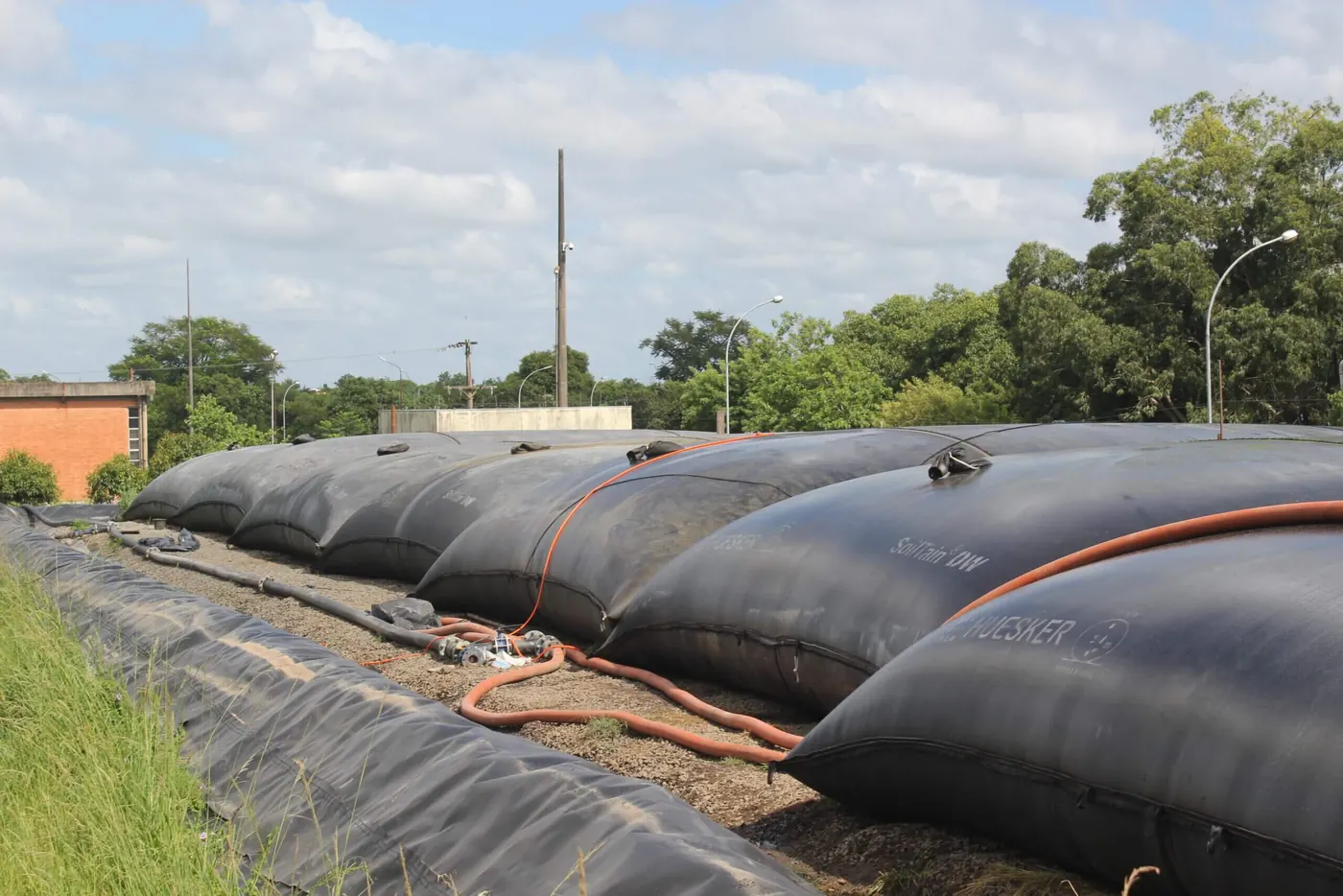
Geobags dewatering sludge on a TSL job

The bag is installed on a lined base with a slope and a drainage system. The liquid that passes through the geotextile, called filtrate, is collected and returned to the client's wastewater treatment system.

Sludge dewatering in three stages

1. Polymer conditioning

Before entering the bag, the sludge is dosed with a flocculant polymer that groups the fine particles into larger flocs. This is the step that determines the result: without the correct dosage, fines pass through the fabric or blind the bag. The dosage is set by a preliminary test using the actual sludge from each operation.

2. Filling and drainage

The conditioned sludge is pumped into the geobag in cycles. With each cycle, water drains through the fabric and the internal volume decreases, allowing further fillings up to the bag's capacity.

3. Consolidation

After the last filling, the bag is left to rest. Water keeps draining by gravity and the material consolidates progressively until it reaches the solids content required for transport and disposal.

Geobag or centrifuge

Both technologies separate water from solids. The choice depends on area, timeframe and volume:

CriterionGeobagDecanter centrifuge
Area requiredYard space for the bagsCompact equipment
Time to resultDays to weeksContinuous and immediate
EnergyPractically noneContinuous power consumption
Large volumes at onceSuitableLimited by flow rate

When area and time are available, the geobag is usually the more economical option. When area is restricted or the timeframe is short, the centrifuge is justified. TSL operates both solutions in sludge thickening and integrates dewatering into industrial dredging.