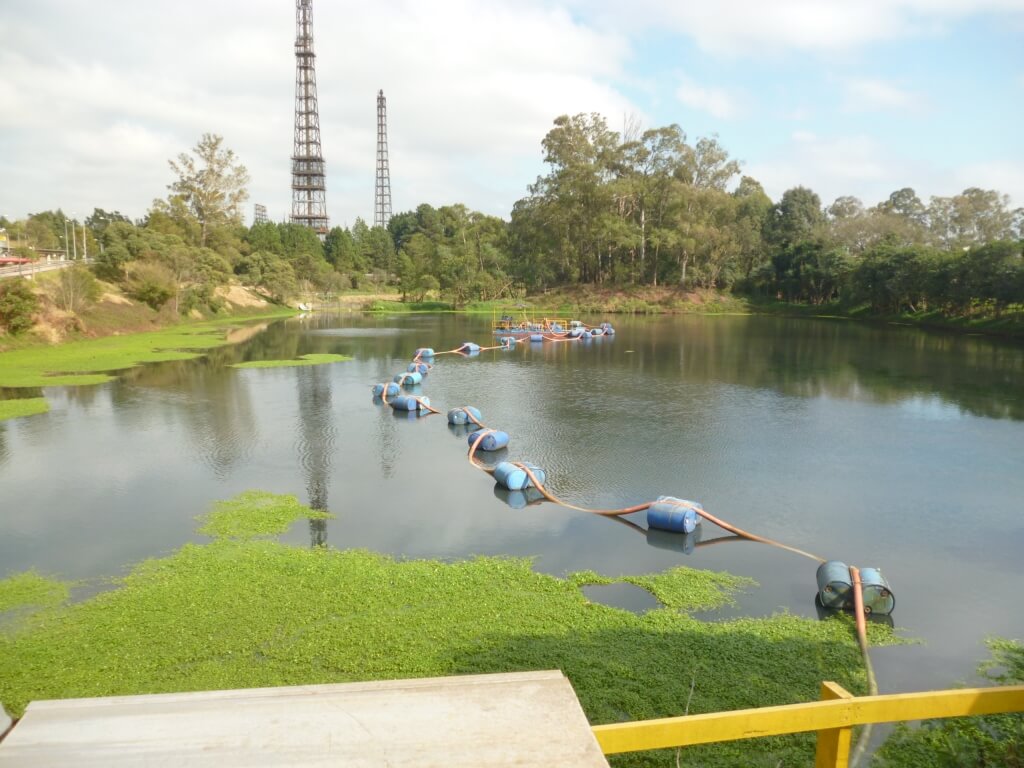
Silting is the buildup of sediment, sludge and organic matter on the bottom of water bodies. In wastewater treatment lagoons, industrial reservoirs and drainage channels, this buildup reduces the useful volume, changes the detention time and lowers the efficiency of the system.
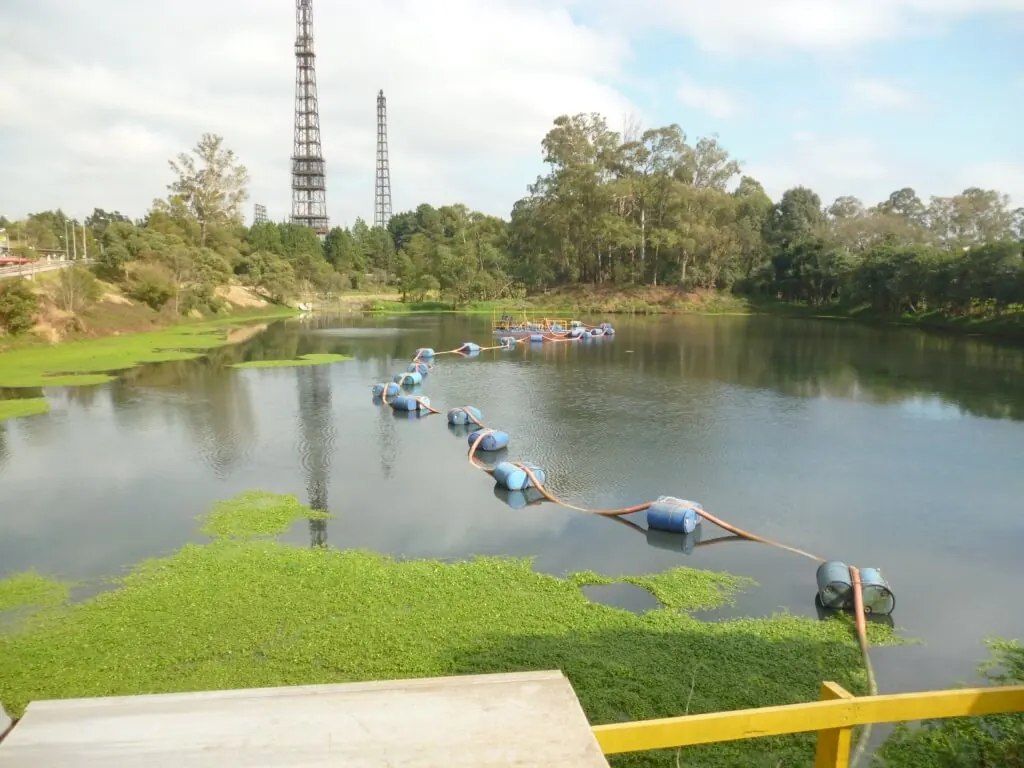
Desilting restores the original capacity of the structure. In lagoons and reservoirs, the material is removed by dredging from a barge that works on the water surface, with no need to drain the structure and no interruption to treatment. In channels, the method is selected according to access, length and sediment type.
Planning starts with a bathymetric survey, which measures depth and the volume of accumulated sediment. This defines the volume to be removed, the equipment and how the material will be dewatered, in geobags or centrifuges.
In river and lagoon cleaning, dredging removes the material deposited on the bed and restores the depth needed for flow, water intake or storage. The removed sediment is dewatered, characterized and sent for proper disposal, with the traceability documentation required by environmental legislation.
A planned intervention, based on bathymetric monitoring, costs less than an emergency one carried out under deadline pressure or pressure from the environmental agency. To understand the signs that a lagoon needs intervention, read lagoon desilting: when to do it. For dredging as a broader service, see industrial dredging.
It is the removal of sediment accumulated on the bottom of ponds, reservoirs and basins, with the aim of recovering useful volume and wastewater treatment efficiency.
Signs include deteriorating effluent outlet parameters, bad odor, reduced depth and overflows during rain. An accurate diagnosis is made by bathymetry.
No. Removal is done by barge dredging, which operates with the pond in service, without interrupting treatment.
Yes. A scheduled intervention, based on bathymetric monitoring, costs less than an emergency one, which happens under pressure from the environmental agency and with short deadlines.